Living in Fort Collins has always come with a tradeoff that plenty of us know well. We get the trails, the pace, the space, the CSU energy, and a lifestyle that feels a whole lot more manageable than Denver. But if work, events, flights, internships, or business keep pulling us south, then I25 becomes part of the deal.
That is why this proposed Front Range passenger rail matters. If everything stays on track, living in Fort Collins in 2029 could mean hopping on a train to Denver instead of fighting traffic for an hour or more. We are talking about a real project, not just another flashy idea. The lease deal is signed, the first phase is funded, and the launch target is early 2029.
For anyone focused on living in Fort Collins, this is not just a transportation story. It is a lifestyle story, a growth story, and potentially a real estate story too.
Why Living in Fort Collins Is Changing
When we talk about living in Fort Collins, we usually talk about quality of life. We talk about bike trails, neighborhoods, schools, downtown, breweries, foothills access, and that sweet spot between city convenience and breathing room.
What we do not always talk about enough is regional connection. Fort Collins does not exist in a vacuum. A lot of people who love living in Fort Collins still need access to Denver for work, sports, concerts, major business hubs, or airport connections. If a dependable rail line makes that easier, it changes the equation.
It could make living in Fort Collins more attractive for:
- Commuters who work in Denver
- CSU students looking for internships
- Families who want Denver access without Denver living
- Professionals who hate driving in snow or traffic
- Homebuyers who want lifestyle first and commute second
That is why this is worth paying attention to.
EXPLORE HOMES FOR SALE IN NORTHERN COLORADO
How the Fort Collins Rail Project Started
Passenger rail between Fort Collins and Denver is not some brand new concept. Colorado had passenger service on this corridor decades ago, but Fort Collins lost that connection back in 1967.
Efforts to bring it back have been around for a long time. Since the early 2000s, there has been a steady push to make Front Range rail a reality. The long term dream is much bigger than Fort Collins to Denver. The broader vision reaches from Wyoming down toward New Mexico.
But phase one is much more focused and a lot more practical. It starts with the northern segment, connecting Fort Collins to Denver.
I think plenty of us have heard big development promises before and rolled our eyes a little. Fair enough. Northern Colorado has seen splashy ideas that never materialized. That skepticism is earned.
What makes this one different is that a major deal is already done. In April 2026, Colorado signed an agreement with BNSF for access to the existing rail corridor between Denver and Fort Collins. The state is set to lease that infrastructure for 25 years for roughly $333 million, which makes this first phase far more realistic than starting from scratch.
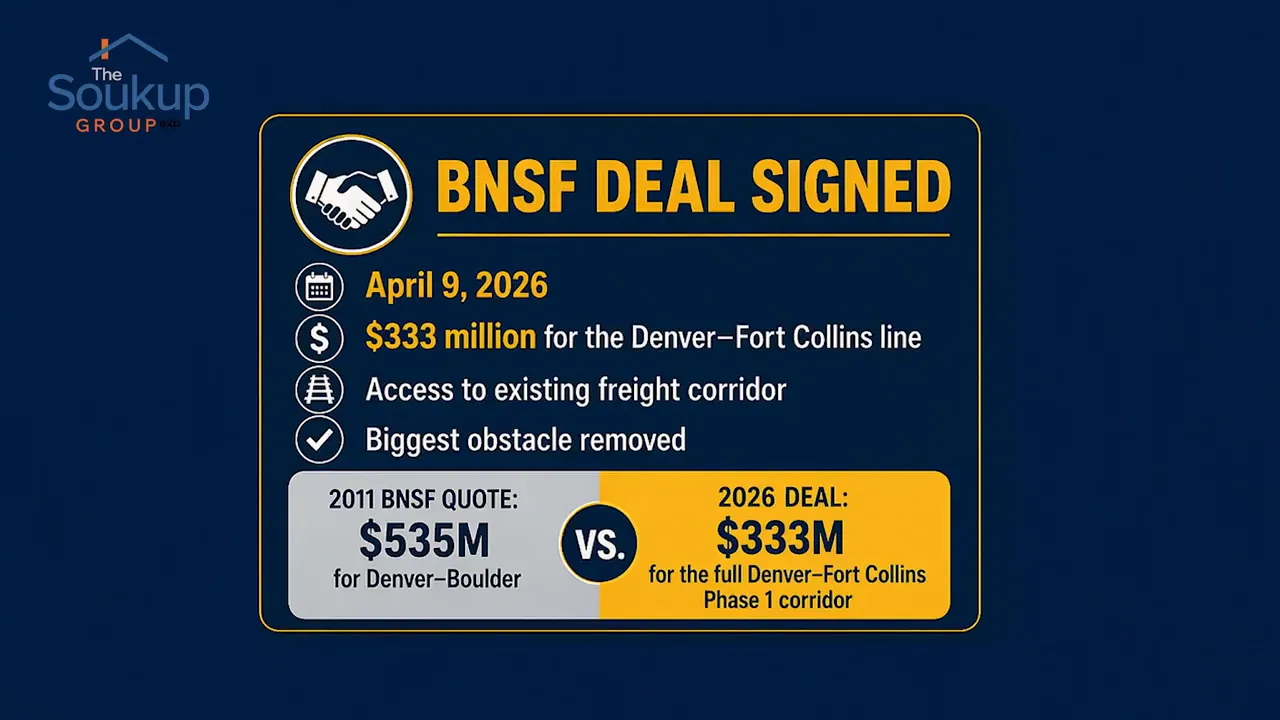
That is a pretty big shift from wishful thinking to actual implementation.
What Phase One Includes
Here is the current picture for the first version of the Colorado Connector, also nicknamed CoCo.
- Route: Fort Collins to Denver Union Station
- Stops: Fort Collins, Loveland, Longmont, Boulder, Louisville, Broomfield, Westminster, and Denver
- Distance: 71 miles
- Trips: 3 daily round trips
- Service: 7 days a week
- Top speed: 79 miles per hour
- Travel time: about 80 minutes Fort Collins to Denver
- Target launch: early 2029
Now, if we are being honest, 80 minutes does not sound amazing if we compare it to a perfect no traffic drive. On a great day, getting from Fort Collins to Union Station by car might be faster.
But that is not the real comparison.
The real comparison is the typical drive. It is the crash on I25. It is the snowstorm. It is stop and go traffic. It is stress. It is parking. It is being unable to do anything productive because both hands and all attention are on the road.
That is where this gets interesting. An 80 minute rail trip with Wi Fi, predictable timing, and no traffic hassle can feel a whole lot better than a shorter drive that drains the life out of us.
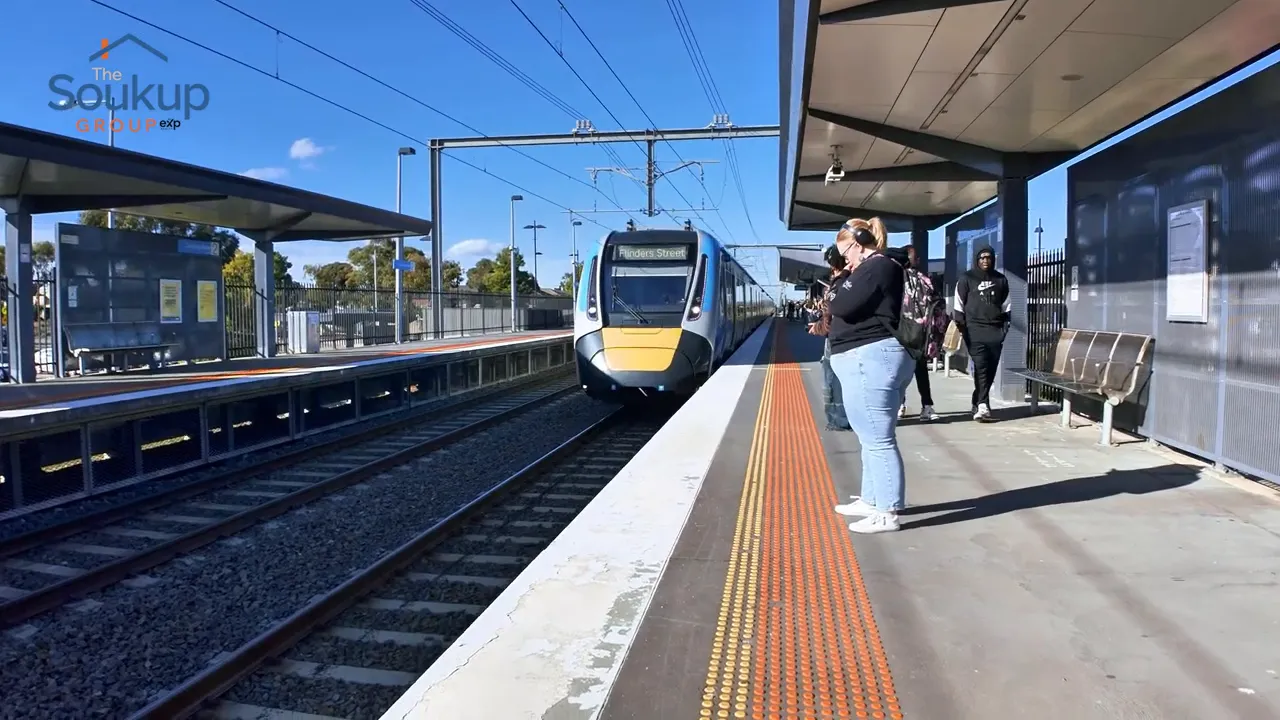
For people serious about living in Fort Collins while staying connected to Denver, that trade can make a lot of sense.
What about phase two?
If voters approve the next funding step, the larger buildout could arrive around 2031 or 2032. That version would extend service farther south with stops that could include South Metro, Castle Rock, Colorado Springs, and Pueblo.
The longer term vision also gets much more ambitious:
- Up to 10 daily round trips by about 2035
- Estimated 2.2 million annual riders
- Total buildout cost in the range of $3 billion to $3.5 billion
- Potential future connections stretching north and south beyond Colorado’s central corridor
How the Rail Project Is Funded
This is one of the first questions everybody asks, and rightly so.
For phase one, the funding is already identified through a mix of existing reserves, grants, and a rental car fee. The rough idea is about an extra three dollars per rental car day helping support that first phase.
That matters because phase one is not sitting around waiting for a brand new statewide vote just to get off the ground.
Phase two is a different conversation.
That next expansion could go to voters through a ballot measure that would create or activate a tax mechanism inside the rail district. The estimated impact discussed is around 25 to 33 cents per $100 spent.
And here is an important detail. Not everyone across all 13 counties would necessarily vote on that. The focus is on the properties and communities within the rail district boundaries near the corridor, roughly a couple miles on either side of the line.
So if living in Fort Collins includes owning property close to that future corridor, this could become more than a headline. It could become a local tax and planning issue with direct consequences.
Benefits for Living in Fort Collins
There are some very real reasons supporters are excited.
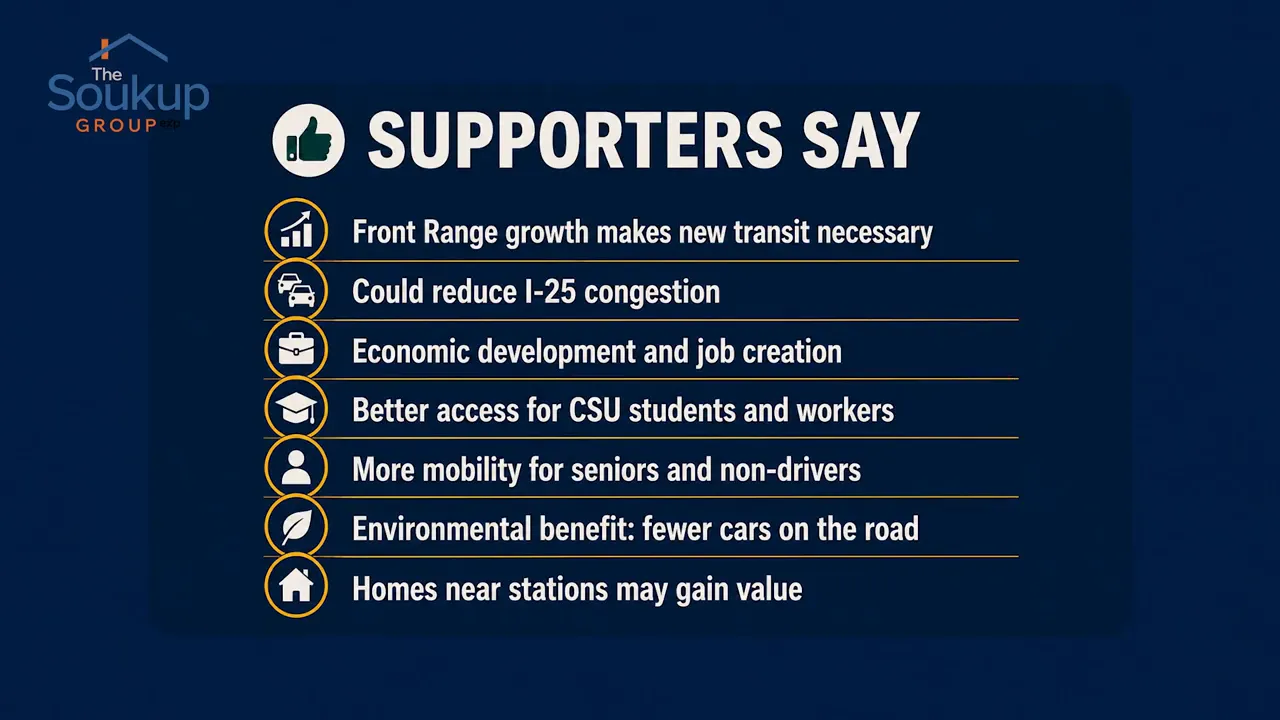
1. The Front Range is growing whether we like it or not
Larimer and Weld counties are expected to grow significantly over the next couple of decades. The broader Front Range already holds millions of people, and the population is projected to keep climbing.
More people means more pressure on I25, more commuting demand, and more need for alternatives.
2. It can support economic development
Transit tends to create more than mobility. It can create jobs, spark commercial development, and encourage housing and mixed use projects around stations.
That is especially relevant if station areas become new mini hubs. Instead of every economic movement funneling into one highway, we create another artery connecting northern Colorado to the larger region.
3. Quality of life might be the biggest win of all
This one is the most compelling to me. Living in Fort Collins already works because life feels easier here. If we can keep that lifestyle while improving access to Denver, that is powerful.
Think about what the rail could mean in practical terms:
- No white knuckle winter drive to Denver
- No bumper to bumper stress before a concert or game
- No parking battle downtown
- No wasted commute time if Wi Fi lets us work on the way
Even with only three round trips per day at first, it still creates options. And options change behavior.
4. Environmental benefits are not nothing
Phase one is expected to use roughly five cars with around 200 passengers per train. With three round trips daily, that could move roughly 1,200 people per day.
No, that does not solve congestion by itself. But it absolutely pulls some number of car trips off the road. That matters for emissions, road stress, and general travel reliability.
5. CSU mobility could improve
For students, living in Fort Collins while accessing Denver internships or opportunities becomes a lot more feasible if the ride is affordable and dependable. Estimated fares were discussed in the range of six to seven dollars, which is hard to ignore compared with gas, parking, and wear on a car.
Concerns About the Fort Collins Rail
Now let us be fair. There are legitimate concerns here.
1. Trust has been damaged before
Colorado has a history of promising transit improvements that either took forever, changed shape, or never happened. That leaves people skeptical, especially when taxes are involved.
That skepticism is not negativity for the sake of it. It is pattern recognition.
2. Ridership is not guaranteed
For this to work, people have to change habits. That is harder than it sounds.
We are used to jumping in the car. Colorado is not a place where rail culture is deeply embedded in daily life. If ridership starts soft, some people will immediately say the project is not working.
And honestly, early ridership probably will be modest. That is normal. The key is whether service is reliable enough to earn trust over time.
3. Reliability has to be rock solid
This is huge. If the train says it leaves at 7:35, it has to leave at 7:35. If someone uses it for a meeting, a shift, a class, or an event and gets burned once, they may never come back.
Reliability is not a nice extra. It is the whole product.
4. The last mile problem is real
Getting from Fort Collins to Denver is one thing. Getting from the station to the final destination is another.
That issue exists on both ends. We need practical ways to connect homes, jobs, campuses, and event spaces to the rail line. Buses, bikes, ride share, walking routes, and local transit all matter here.
If living in Fort Collins means we can reach a station easily, the rail becomes much more useful. If the station is technically close but functionally hard to reach, adoption gets tougher.
5. Cost overruns are always a concern
It would be nice to believe a public project will come in under budget. Most of us know better. Inflation, delays, materials, labor, and scope creep can all drive costs up fast.
So yes, that $333 million figure for phase one may not end up being the final number. It is smart to acknowledge that up front.
Home Values in Fort Collins
This is where the conversation gets especially interesting for homeowners and buyers focused on living in Fort Collins.
If the rail launches in 2029 and actually gets adopted, proximity starts to matter. Some studies referenced around station driven appreciation suggest homes within about a half mile of a station can see a noticeable bump in value, sometimes in the range of 10 percent to 25 percent.
That is not a guarantee, and the radius is fairly tight, but it is significant.
If a downtown Fort Collins station becomes part of daily life, then walkability to that station becomes a premium feature. Living in Fort Collins near that connection could mean:
- Walking from home to the train
- Working or socializing in Denver without driving
- Returning home the same night with minimal hassle
- Accessing a station area that may attract more restaurants, housing, and retail

And this is not just about downtown. Loveland, Longmont, Louisville, Boulder, and other station communities could see similar ripple effects, especially where there is room for mixed use and higher density development around station zones.
For living in Fort Collins, that can cut both ways.
On one hand, it may strengthen home values and demand. On the other hand, it may push certain areas higher in price if station access becomes a premium. That is especially likely if Fort Collins keeps attracting people who want northern Colorado lifestyle with Denver income potential.
Imagine someone earning a strong salary in the Denver Tech Center but choosing living in Fort Collins because rail makes the region feel more connected. That broadens the buyer pool.
VIEW HOMES FOR SALE IN NORTHERN COLORADO
The Future of Living in Fort Collins
Right now, here is where things stand:
- The BNSF access deal has been signed
- The rail has been branded the Colorado Connector, or CoCo
- Phase one is targeted for 2029
- A 2026 ballot measure could shape phase two funding
- A full Fort Collins to Pueblo corridor could follow in 2031 or 2032 if approved
So will this change everything? Maybe not overnight.
But could it materially change living in Fort Collins? Absolutely.
It could change how we commute. It could change what neighborhoods become more valuable. It could change how students and workers access opportunity. It could change whether people choose Fort Collins over somewhere farther south.
The biggest question is not whether the idea sounds good. It does.
The biggest question is whether the service becomes trustworthy enough that people actually build their routines around it. If they do, then living in Fort Collins gets more compelling in a very practical way. If they do not, the impact stays limited.
That is really the whole game.
If you're planning a move to Fort Collins or have questions about the local real estate market, I'm here to help. Whether you're exploring neighborhoods or wondering how future projects like the Colorado Connector could impact your decision, let's talk.
Call/Text me at 970-893-3533 or book a FREE consultation to get personalized guidance for your move.
FAQs About Living in Fort Collins
When is the Fort Collins to Denver passenger rail expected to start?
The current target for phase one is early 2029, assuming the project stays on schedule.
What stops are planned in phase one?
The planned route includes Fort Collins, Loveland, Longmont, Boulder, Louisville, Broomfield, Westminster, and Denver Union Station.
How long would the train ride take from Fort Collins to Denver?
The estimate is around 80 minutes from Fort Collins to Denver for phase one.
How often would trains run?
Phase one is planned for three round trips per day, seven days a week. Longer term plans could increase that to ten round trips daily.
How could this affect living in Fort Collins home values?
If ridership takes hold and station areas become more active, homes close to a Fort Collins station could become more desirable. Areas within walking distance may see the biggest benefit.
Is phase one already funded?
Yes. The first phase is expected to be covered through reserves, grants, and an added rental car fee. Phase two would likely require additional voter approved funding.
What is the biggest challenge for the project?
The biggest challenges are likely trust, ridership, reliability, and solving the last mile connection from stations to homes, jobs, and campuses.
For anyone thinking seriously about living in Fort Collins over the next few years, this is one of those projects worth following closely. Some local stories are interesting. This one could actually reshape how the region functions.
Read More: MOVING TO NORTHERN COLORADO: BEST PLACES TO LIVE, COSTS & WHAT TO EXPECT