If you are moving to Fort Collins CO, the headlines can be confusing. Colorado has seen slower growth, and more people have moved from Colorado to other states than arrived from them. So, is everyone really leaving Fort Collins?
No. The real story is a lot more specific than that.
Colorado passed 6 million residents in the year ending July 1, 2025, but statewide population growth was only 0.4%, the slowest pace since 1989. Colorado also recorded negative net domestic migration, meaning 12,100 more people left for other states than moved in. Federal migration estimates put the 2024 net loss at roughly 24,000 people.
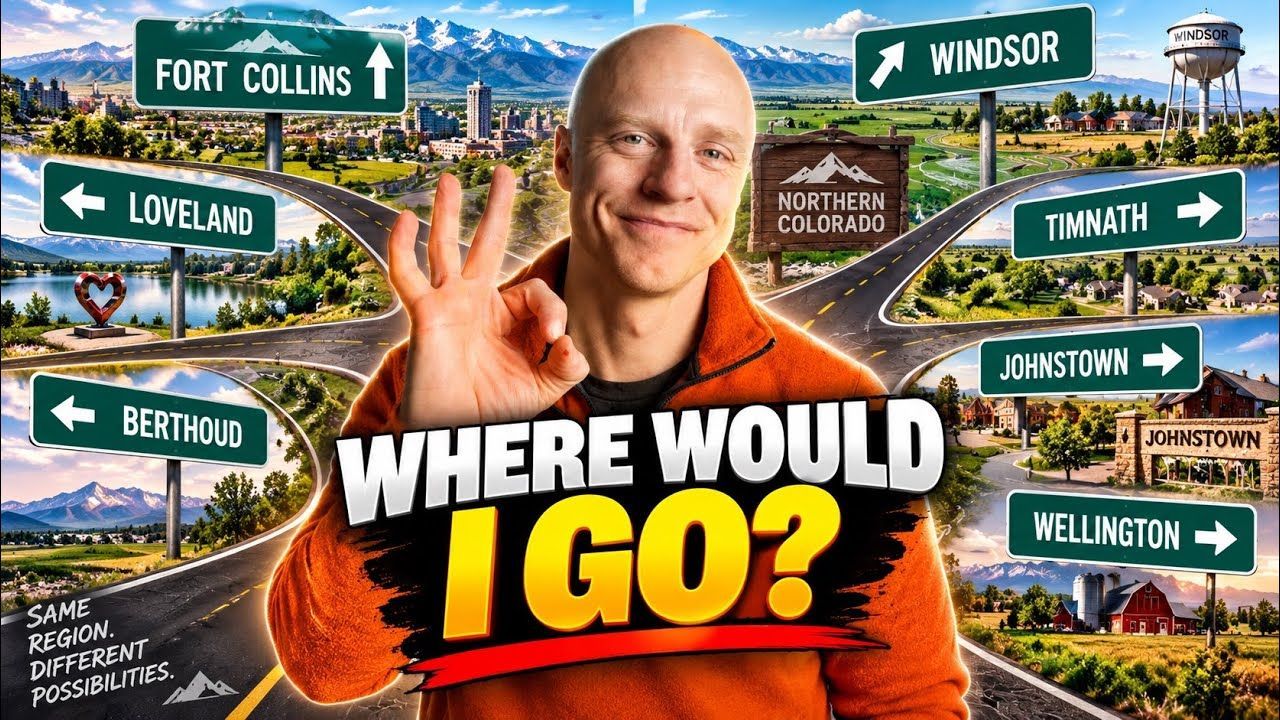
But Northern Colorado is not following the same pattern. Larimer County, home to Fort Collins, Loveland, Wellington, Berthoud, and Estes Park, added about 3,100 people, a growth rate of approximately 0.83%. That growth was driven largely by people arriving from other states.
That is the important distinction for anyone moving to Fort Collins CO. People are leaving for real reasons, but plenty of people are choosing this area on purpose. The two groups are often optimizing for completely different things.
Table of Contents
- Moving to Fort Collins CO: What’s Really Changing?
- Why People Are Leaving Fort Collins CO
- Why People Are Still Moving to Fort Collins CO
- What to Know Before Moving to Fort Collins CO
Moving to Fort Collins CO: What’s Really Changing?
It is easy to hear that Colorado is losing people and assume every local market is struggling. That is not what is happening.
Larimer, Weld, and Douglas counties posted the strongest positive net migration in the state, while 24 of Colorado’s 64 counties have lost population since 2020. Jefferson, Boulder, and Eagle counties saw some of the biggest declines.
Weld County has also passed Larimer County in total population for the first time. Weld sits around 378,000 residents compared with roughly 377,000 in Larimer. Since 2020, Weld has grown about 14%, while Larimer has grown around 5%.
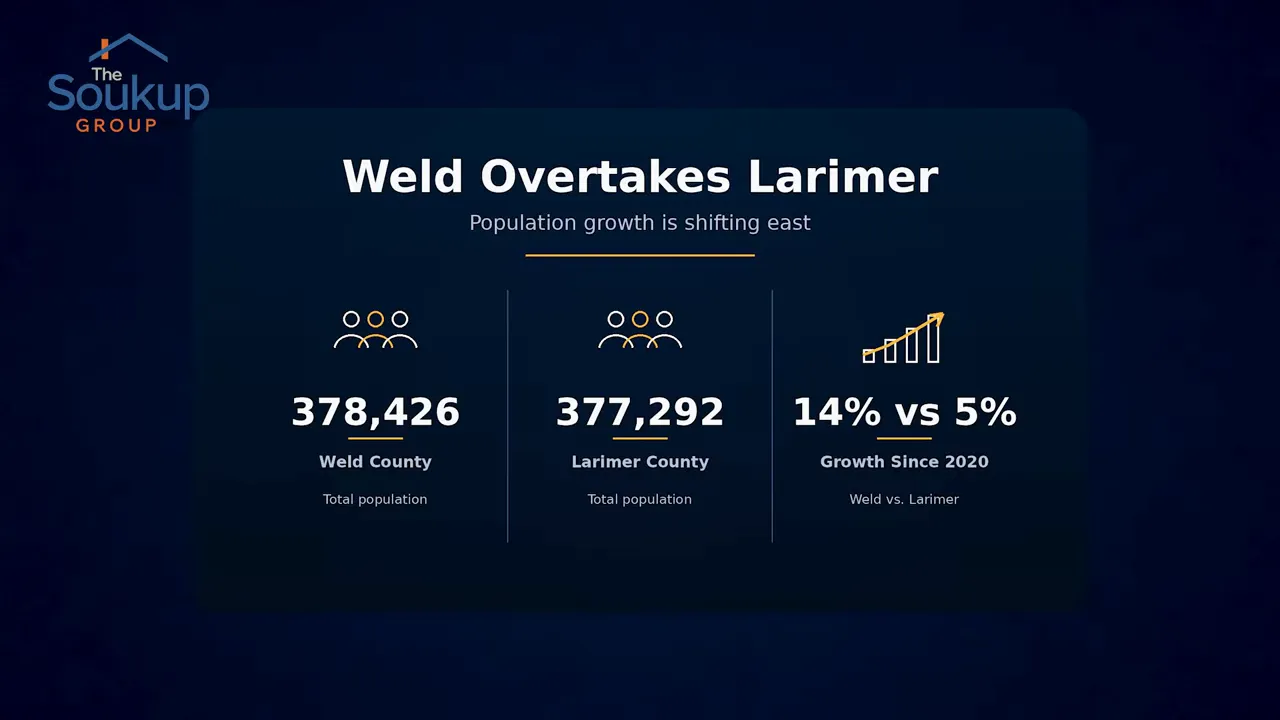
That gap tells us something useful. Plenty of people who want to stay near Fort Collins are going east, where newer homes and more square footage can be easier to afford. This is less of an abandonment of Northern Colorado and more of a regional affordability decision.
Why People Are Leaving Fort Collins CO
We asked our agents for the real reasons behind recent seller decisions, not the polished version that ends up in a listing description. These are the themes that came back most often.
1. Affordability and driving until they qualify
This is the biggest one, and it is not close. Many homeowners and buyers are trading location for house size, lot size, or a lower monthly payment.
For the same money, they can often get more home by moving east to Severance, Windsor, Eaton, or Ault. Others go north to Wellington or even Cheyenne, where Wyoming has no state income tax. Some head toward the foothills for more land and views, accepting less convenience in return.
Some people leave Colorado entirely for Texas, Arizona, Idaho, or Tennessee. Financial strain can be part of that. Higher holding costs, flat rents, and thin investment margins can turn a property from an asset into a problem.
Here is the honest version for anyone moving to Fort Collins CO: if maximum square footage per dollar is the priority, Fort Collins may not be the best fit. If walkability, trails, Old Town, and a short drive to much of the city are the priority, that is the premium you are paying for.
2. Politics and personal values
Politics is a real reason people leave, whether anyone enjoys discussing it or not. We are not here to tell anyone which viewpoint is correct. But people do make relocation decisions based on the political environment they want around them.
Fort Collins is a college town in a state that has become more politically blue. Wellington, East Windsor, and Old Town can feel very different from one another. Before moving to Fort Collins CO from a very different environment, spend real time in the areas you are considering. A weekend is better than trying to form an opinion from maps and listing photos.
3. Family pull, especially for new parents
Family pulls people in both directions. Sellers have moved closer to relatives in Ohio, Denver, and other places because distance became harder once a first child arrived.
Being 1,400 miles from grandparents may sound manageable until every weekend, sick day, and childcare issue becomes a logistical exercise. New parents are especially likely to reconsider where they live.
Established families with school-age children are different. Once they are connected to schools, neighbors, activities, and local friendships, they tend to stay. Pulling up those roots has a cost that is bigger than moving expenses.
4. Job relocation and commute math
Work can pull people toward Fort Collins or push them away from it. We have seen both. Some sellers move closer to a new job. Others sell because their work location changed.
The commute is especially important for anyone working in Denver or Boulder. I-25 construction and traffic can wear people down over time. One seller simply wanted to eliminate highway driving altogether.
Do not test your commute at 11:00 a.m. on a Tuesday and call it research. If moving to Fort Collins CO means regular travel south, make the drive at your actual commute time. A house can look perfect on paper and still be the wrong decision if the weekly drive drains you.
5. Investors and landlords are exiting
A meaningful portion of current inventory is not someone’s primary residence. It is a rental, inherited home, second home, or investment that no longer makes financial sense.
We have seen owners sell rentals held for more than 20 years because they were simply done managing them. Other examples include non-performing rentals, inherited properties owned by out-of-state heirs, and homes sold to free up capital for a business or startup.
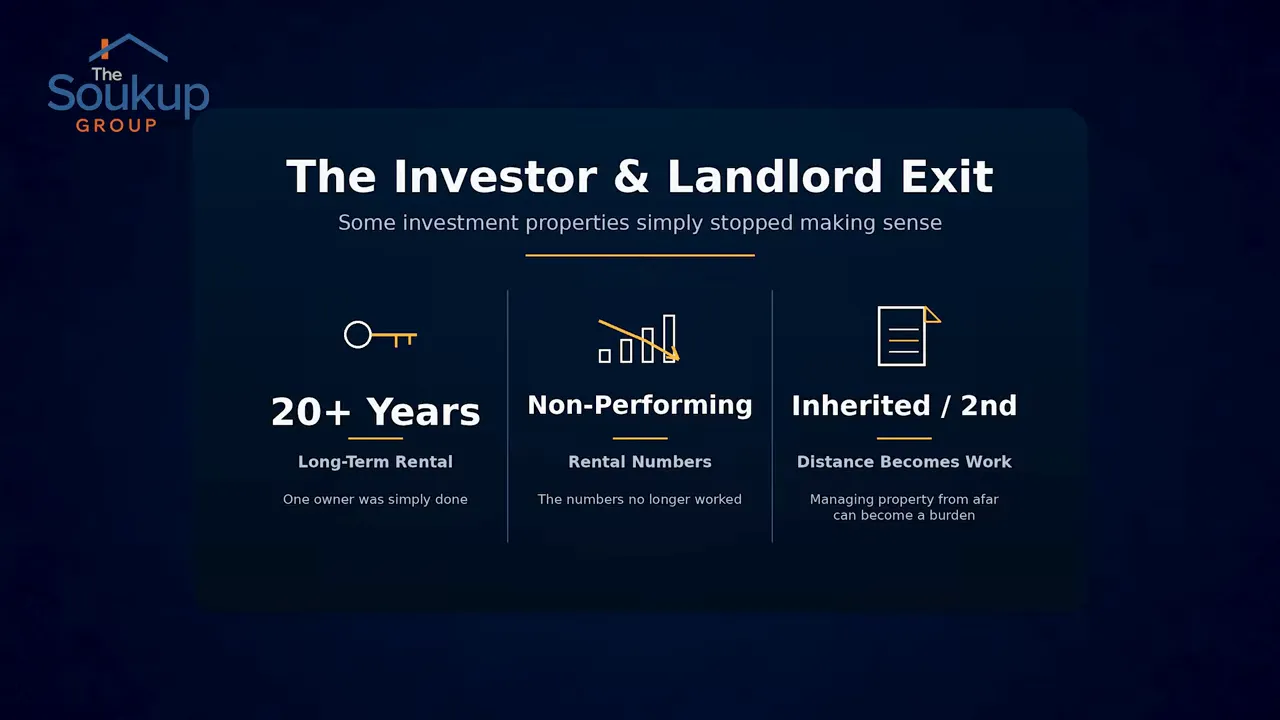
There is a practical lesson here for buyers. Tired rentals and estate sales may offer negotiation leverage, but they can also carry deferred maintenance. Both can be true. Do not confuse a more flexible seller with a turnkey property.
6. Divorce, health, and life changes
Not every home sale is a market statement. Divorce, medical needs, aging, mobility limitations, and changing household needs create steady inventory every year.
People may need to live near a specialist, downsize from a home with stairs, leave a yard behind, or move after a major life chapter ends. These are personal decisions, not a verdict on Fort Collins.
7. The equity trade
Some longtime owners, especially those who bought between 2015 and 2018, are sitting on substantial equity. They can sell a paid-down home, relocate to a lower-cost market, buy their next property free and clear, and keep the difference.
That may fund early retirement, a business, or a simpler financial life. These are not necessarily distress sales. Sometimes Fort Collins did exactly what homeowners hoped it would do: it built wealth.
Why People Are Still Moving to Fort Collins CO
The exact forces that make some owners leave are often the reasons others arrive. Affordability is relative. Family pull works both ways. Lifestyle is subjective. That is why moving to Fort Collins CO can feel either expensive or like a bargain, depending on where we start.
Relative affordability
Fort Collins is expensive compared with Greeley, but it can feel far more attainable than Boulder, Denver, Seattle, San Diego, Austin, or much of California. Some relocating households sell in a high-cost coastal market, buy here, reduce their housing payment substantially, and get more space plus a garage.
If we are coming from the Midwest or South, the same price point can feel like a stretch. Same city, completely different experience.
A lifestyle built into the week
People are not only moving to Fort Collins CO for a house. They are choosing how they want an ordinary Tuesday to feel.
Horsetooth Reservoir is about 15 minutes from downtown. Poudre Canyon is close by. Rocky Mountain National Park is under an hour away. Old Town has a genuine downtown economy, restaurants, local businesses, events, and a character that does not feel manufactured.

With roughly 300 days of sun and a trail network connecting much of the city and region, outdoor time does not need to be reserved for special trips. That matters for people designing their life around their non-work hours.
Family and kids
Grandparents follow grandkids. Adult children move closer to aging parents. Siblings cluster together. Often one household relocates to Fort Collins, and within a few years more relatives follow.
Families also come specifically for what they believe will be better for their children. Poudre School District is a genuine draw, along with neighborhoods where kids can bike on trails to friends instead of navigating major roads.
This is one of the stickiest groups in town. Families who establish school and community roots often hold onto their homes longer than other groups.
A job base that continues to invest
The job story is not just Denver spillover. Colorado State University anchors the local economy as the area’s largest employer. UCHealth provides a deep and stable healthcare employment base. Federal science facilities, including USDA and CDC operations, add another layer.
Broadcom and Apple have committed roughly $1.5 billion to expanding the Fort Collins community. Add companies such as Woodward Governor alongside the local tech and craft brewing ecosystem, and there are real reasons people arrive for work.
Healthcare access without a major metro attached
Healthcare becomes a major relocation factor for many households over 55, as well as families with ongoing medical needs. Fort Collins offers significant medical infrastructure without requiring daily life in a major metro area.
That is one reason people leave smaller mountain towns for Fort Collins. They want care nearby while keeping access to a smaller-city lifestyle.
Hybrid work and practical travel access
Remote work did not disappear. It matured. Many arrivals have hybrid arrangements and are choosing a place that improves life outside work.
Denver International Airport is roughly an hour away for occasional business travel. Northern Colorado Regional Airport could have commercial flights as early as 2027. For higher-income households whose employer is not based in Colorado, that combination can be very appealing.
Big enough, small enough
Fort Collins sits around 170,000 people. It is large enough for restaurants, a university, healthcare, jobs, and an airport within reach. It is still small enough that we run into familiar faces at parks, schools, grocery stores, and local events.

That balance is hard to find. It is one of the strongest reasons people keep moving to Fort Collins CO despite the price premium.
What to Know Before Moving to Fort Collins CO
The split is straightforward. Many people leaving Fort Collins are optimizing for lower costs, more house, lower taxes, a different political fit, a better commute, or the chance to cash out equity. Many people arriving are optimizing for family, kids, health care, lifestyle, work opportunities, and community.
Colorado is not collapsing. It is simply no longer the hottest destination in America at all costs. Growth has slowed statewide, while Larimer County continues to attract people.
For anyone moving to Fort Collins CO, that has a practical benefit: the market has more inventory than it has had in years. This is not a frenzy, and it is not a crash. It is a more normal market where we have time to think, negotiate, inspect carefully, and make decisions based on fit instead of panic.
Before choosing a neighborhood, get clear on the tradeoff that matters most:
- Do we want maximum house for the money, or do we want a more central Fort Collins lifestyle?
- Will our commute work at its worst, not just on a light traffic day?
- How important is being near family, schools, trails, downtown, or medical care?
- Are we buying a primary home, a rental, or a second home that may become work from a distance?
Moving to Fort Collins CO is a great decision for the right household. The best plan is not to chase headlines. It is to get honest about the tradeoffs, understand the local differences, and choose the part of Northern Colorado that matches the life we actually want to build.
Thinking about moving to Fort Collins CO and considering a new construction home ? Whether you're relocating from out of state, moving closer to family, or looking for a newer home with modern features and less maintenance, we can help you navigate your options.
From Fort Collins and Loveland to Windsor, Severance, and Wellington, we can help you compare new construction communities, builders, locations, pricing, and what each area offers.
Call or text (970) 893-3533 or book your FREE consultation today to start your Northern Colorado home search.
Frequently Asked Questions
Is moving to Fort Collins CO still a good idea in 2026?
It can be a strong choice if the lifestyle, schools, healthcare access, job base, and community fit your priorities. The right answer depends on your budget, commute, household needs, and whether you value location over maximum square footage.
Why are people leaving Fort Collins?
The most common reasons include affordability, moving closer to family, job changes, commute fatigue, investor or landlord exits, life events such as divorce or health needs, politics, and selling to use accumulated equity elsewhere.
Is Fort Collins more affordable than Denver or Boulder?
For many people arriving from Denver, Boulder, coastal California, Seattle, San Diego, or Austin, Fort Collins can feel more affordable. For households arriving from less expensive parts of Colorado, the Midwest, or the South, it may feel expensive. Affordability depends heavily on the market you are leaving.
Should we consider Windsor, Severance, or Wellington instead of Fort Collins?
Those areas can make sense when more space, newer construction, or a lower price point is the main priority. Fort Collins can make more sense when walkability, trails, Old Town, established neighborhoods, and convenience are worth paying more for.
Read More: NORTHERN COLORADO HOUSING MARKET: WHAT BUYERS AND SELLERS NEED TO DO NOW