
Northern Colorado Metro District Taxes: What Homebuyers Need to Know
Two houses, both $650,000, both in Loveland. Same schools, same fire department, same police, same trash pickup. The first house pays $3,445 per year in property taxes. The second, in a neighborhood called Kinston, pays $6,902. That's $3,450 more every single year, almost double, and not one dollar of that extra money goes to the city of Loveland, Thompson School District, or Larimer County.
It goes to a government you've never heard of, that you didn't vote for, that was created before the house even existed. To pay off a debt somebody else decided on. It's called a metro district, and if you're moving to Northern Colorado, this is the tax nobody's going to tell you about. But if you're buying new construction or something built in the last 10 to 15 years, you're going to find out.
I've helped hundreds of families relocate to Fort Collins and Northern Colorado. I went into this research absolutely convinced metro districts were indefensible. Then I ran the numbers on a $500,000 house, and the math did not come out the way I expected. So here's what you're getting: what a metro district actually is, why we even have them, why people call them predatory, why they might actually be a good deal, and what it costs in Fort Collins, Timnath, Loveland, Windsor, and Berthoud, neighborhood by neighborhood.
Stick around to the end because I'm going to give you the questions you need to ask before you write an offer on a house in one of these neighborhoods. The reality is that in Timnath, Windsor, Johnstown, and half of Loveland, there often isn't a non-metro district option at certain price points. The goal isn't to avoid them. The goal is to know the numbers before you fall in love with the house.
Table of Contents
- What a Metro District Is (and Who Gets to Vote)
- Why Northern Colorado Has Them: Gallagher, TABOR, and the Financing Arbitrage
- The Ugly Side: Self-Dealing, Compounding Debt, and No Oversight
- Kinston: The $3,450-a-Year Example
- Water's Edge and Saunders: Fort Collins' 50-Mill District
- WildWing: Timnath's 63-Mill District with a $500 Annual Fee
- Heritage Ridge: Berthoud's 78-Mill District with a Misleading Cap
- Raindance: Windsor's Destination Development with a $2,500 Capital Fee
- Montava: Fort Collins' $90,000-per-Unit Infrastructure Example
- The Math That Changed My Mind: When a Metro District Home Is Actually Cheaper
- The Questions to Ask Before You Write an Offer
What a Metro District Is (and Who Gets to Vote)
Everybody thinks a metro district means an HOA. It does not. Think of it as a second city layered on top of the real city that only exists inside your subdivision. It's got a board. It can tax you. It can borrow money in your name. It can charge you fees, and it can take land by eminent domain. The legal term is a quasi-municipal corporation organized under Title 32 of Colorado law. And this is the part that gets people: the statute says it has perpetual existence. That's the statute's own word. It does not expire.
To become a metro district, you have to provide any two services off a list of ten: fire protection, mosquito control, parks and rec, safety protection, sanitation, solid waste, street improvement, transportation, water. Water and streets qualifies. Parks and drainage qualifies. Two, that's the bar, which is exactly why basically every master-planned community in the Front Range is one. Fort Collins has made it much more strict on what it allows to pass, but the tool still exists.
Now let's talk about who gets to vote, because that sets up everything else. An eligible elector is a registered Colorado voter who either lives in the district or owns taxable property in it or is under contract to buy it or is married to somebody who does. You don't have to live there. You just have to own dirt. And guess who owns all the dirt before a single house is built? The developer.
Colorado does require disclosure, and it's more than most agents realize. The seller has to hand you the service plan, the total authorized debt, the maximum mill levy, the fee schedule, and a dollar estimate of your taxes. The bad news is the timing. The law says concurrently or prior to the execution of a contract to sell. Concurrently, meaning legally, the seller just has to provide you that information at the time of contract. Nothing requires you to see it beforehand or in the MLS. So if you're relocating here and you found the house on Zillow, there's no practical way for you to know all this information. That's where my team and I come in. We understand how to find this information and are happy to help you along that journey, because these are important questions to understand what you are signing onto for the next 5, 10, 20, 30-plus years.
Why Northern Colorado Has Them: Gallagher, TABOR, and the Financing Arbitrage
There are three dates. 1981, Colorado rebuilds the Special District Act. The legal tool gets created. 1982, the Gallagher Amendment passes. And 1992, TABOR passes. The tool existed first, then two constitutional amendments came along and made it irresistible. That's the whole story.
What did we do before? Cities used to just build it. Roads, parks, utilities, fire, paid for out of community-wide tax revenue shared between brand new residents and the people who have been there for 30 years. Then there were improvement districts, but those were an assessment, a lien on your specific parcel with a defined payoff, usually about 10 years. Politically explosive because people could see it. And third, and this one still exists, it was never repealed: the Subdivision Improvement Agreement. The developer fronts the cost, posts collateral, and gets it back in the price of the lot.
That right there is the most important comparison in this entire video. Under the old way, the cost of the roads was in the price of the house. You finance it in your mortgage. It's finite and the interest is deductible. Under a metro district, that same cost gets moved off the price and onto a property tax that goes up with your assessed value and has no end date. Same house, same dirt, completely different animal.
Gallagher, in plain English, locked in the share of Colorado's property tax base each side could carry. Residential 45%, commercial 55%. Commercial was frozen at 29%. So residential was the only thing that could move. And Colorado built houses way faster than it built office parks. So every two years, the state had to force the residential rate down to hold that line. 21% in 1983, 7.15% by 2020. Your home's taxable share dropped by about two-thirds in 37 years, which sounds great until you realize what it did to the city's budget. Same house, less revenue every single cycle.
And then TABOR shuts the door. TABOR says a city can't raise a mill levy or borrow money without a vote of everybody. So picture it. Fort Collins wants to fund the arterials and the detention ponds for a new subdivision out east. Under TABOR, it has to ask the whole city to approve a tax on themselves to pay for infrastructure they will never drive on. How do we think that vote's going to go? It loses every single time.
But here's the arbitrage. TABOR doesn't care how many voters there are. A city of 80,000 and a brand new district with four voters, the Constitution treats those two elections exactly the same. And you don't have to take my word for it. This is on the Colorado Association of Home Builders' own website. They say Gallagher reduced rates, decreasing revenue for cities and towns with increased pressure on growth to pay its own way. And on TABOR, that by requiring new development to pay its own way, cities and towns avoid the requirement to get voter approval for tax increases, shifting the tax burden to metro district residents instead. That's the industry saying the quiet part on their own website.
The Ugly Side: Self-Dealing, Compounding Debt, and No Oversight
Once you understand that a developer can create an actual government before a single person lives there and that government can borrow money in your name and the only people who get to vote on it work for the developer, you're going to understand why some very serious people call this the biggest legal problem in Colorado real estate. Let me show you four things. And the fourth one comes straight out of a Colorado State Audit from about three months ago.
In 2023, Granby Ranch up in Grand County, four eligible voters, two employees and two friends of the developers, were set to authorize up to $12.7 billion in debt across six metro districts. Interest rates authorized as high as 14%. Total repayment of obligations north of $60 billion. Four or five people, $12.7 billion. And it was completely legal.
This next one takes a little bit to explain, and it's the most damning. Four steps. One, the developer-controlled board hires the engineer and the accountant. Two, the district signs an agreement to buy the infrastructure from the developer at the developer's own stated cost, verified by those same professionals. No competitive bidding. Three, the district issues bonds to pay for it. And four, the developer buys the bonds. So the developer sets the price, approves the price, pays himself the price, and then lends the money to the government he controls. And the homeowner pays the interest.
Amber Creek up in Thornton. I'm reading this one off the district's own website. October 2017, the board approves a $1.7 million bond to Lennar Colorado. The projected annual net effective interest rate on that bond, in their words, 39.4%. At the time it was issued, four of the five directors were affiliated with the developers. That $1.7 million bond was projected to cost about $26 million by the time it was paid off. Roughly $24 million of that is interest.
What about the debt that never dies? The Meadows in Castle Rock, seven metro districts, $70 million in original bond principal issued in 1989. The principal has never been reduced, not once. End of 2023, they owed about $434 million. $364 million of that is accumulated interest. In 2023, residents paid almost $14 million in property tax, and the debt still grew by more than $20 million that year. Three things keep it alive: subordinate bonds where the unpaid interest compounds every year, capital appreciation bonds with zero cash interest where everything compounds to maturity, and refunding, which resets the clock. A 2004 bond that should have been paid off in 2034 gets refinanced in 2012 out to 2054.
And the fourth thing, nobody's in charge. And this isn't me. This is the Colorado State Auditor's June 2026 report. 2,907 special districts statewide, 680 of them levying more than 50 mills, 93 of them over 80. Nineteen districts told the state they're having difficulty making debt payments. 383 hadn't filed a 2024 annual report as of April. And 29 districts eligible to be dissolved, 21 can't be because they still owe money.
The reform record tells you everything. Every bill that passed regulates disclosures and websites. Every bill that would have constrained the money has died four years running. The one reform that would end developers self-dealing, just barring developers from buying their own district's bonds, has failed four times. The bill that did pass explicitly allows it and caps the interest rate instead. A state representative put it this way: There is no authoritative body over metro districts, not county government, not state government.
Now, one thing before we move on, because I want to be straight with you. You're going to be seeing numbers online like $104 billion or $1 trillion. Those are authorized debt numbers, not issued debt numbers. Actual issued debt was somewhere around $19 billion. The gap matters. It's how much capacity is sitting out there unused. But they are not the same thing, and conflating them is the single most common mistake people are making on this topic.
Kinston: The $3,450-a-Year Example
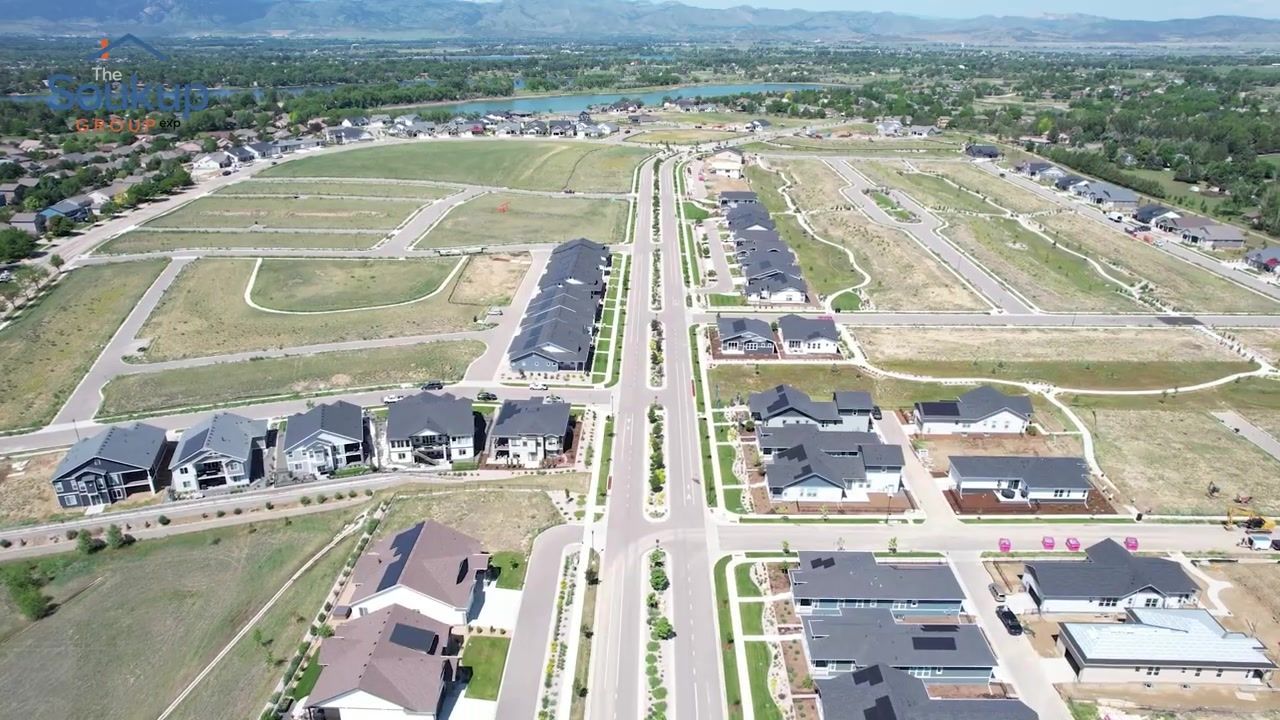
Kinston in Loveland is the primary example of metro district tax burden, and it's the one that got me. Two houses, both $650,000, both in the city of Loveland. Same schools, same fire department, same police, same trash pickup. The first house pays $3,445 per year in property taxes. The Kinston house pays $6,902. That extra $3,457 goes entirely to the metro district, not the city or county or schools.
The metro district levy is 86.9 mills. That's roughly $3,457 a year additional on top of Loveland's base rate of 79.8 mills. Total mill levy is approximately 166.7 mills. That costs a buyer about $288 a month, which is equivalent to losing $44,000 in purchasing power. At current rates, every dollar of monthly payment buys you about $154 of mortgage. So that $288 a month is $44,000 of house you can no longer buy.
And here's the part that really matters: your mortgage payment is frozen for 360 months. This isn't. It's an additional tax. It goes up every time the assessor revalues your property, and that happens every two years. At 3% appreciation, a payment that starts at $288 a month is over $400 by year 40. Your principal and interest never moves, and there's no sunset. I went looking district by district. Not one Northern Colorado district discloses an end date for its mill levy. The only hard dates I found anywhere were bond maturities, and those are out in the 2050s.
Now, I've had friends living in metro districts here in Northern Colorado who actively go to take board seats on the metro district and try to get actively involved because they don't like how it's running or who is in those seats currently. So one of the things I think we can do on the front end is a lot of due diligence research. Try to understand where the metro district currently sits and what it's allowed to do as far as levying more mills, raising the mill levy, where its debt is, where it could be, and expectations. But then also, if it's already an existing metro district with people already living there, what's the board like? How many people have taken on board seats? Look at the meeting minutes, see what's going on so that you understand when you're buying into these metro districts.
Water's Edge and Saunders: Fort Collins' 50-Mill District
Water's Edge and Saunders in Fort Collins has a metro district levy of 50 mills. That's about $1,989 a year on top of Fort Collins' base rate of 92.7 mills. The bond matures December 1, 2051. That costs a buyer about $166 a month, which is equivalent to losing $25,500 in purchasing power.
Here's something worth noting: at a $500,000 home, this may actually be cheaper than a non-metro district alternative when infrastructure costs are factored in. I'll get to that math in a later section, but the short version is this: if the infrastructure genuinely costs $30,000 to $40,000 per home, and the metro district borrows at 5.46% instead of the developer borrowing at 12% to 13%, then the lower purchase price plus the lower interest rate can actually make the metro district home the cheaper deal on day one. That break-even climbs fast at higher price points and higher levies, but at $500,000 and 50 mills, the math says the district home might be the better value initially.
The crossover year, when the district home becomes more expensive, is around year 36 at this price and levy. That's because the tax grows with your assessed value every two years, and the mortgage doesn't. So if you're planning to stay for 10 or 15 years, the district home could save you money. If you're planning to stay for 40, it won't.
WildWing: Timnath's 63-Mill District with a $500 Annual Fee
WildWing in Timnath has a metro district levy of 63.3 mills, which is roughly $2,500 a year additional. The bond matures December 1, 2053. Timnath's base rate is 101.2 mills before the metro district, so the total mill levy is over 164 mills. That's one of the higher combined rates in Northern Colorado.
And here's the kicker: WildWing also charges a $500 annual fee per property. That fee is not deductible. It's a service charge, not a tax. So you're paying the $2,500 in additional property tax plus the $500 fee, and only the property tax portion is deductible, if you itemize. At our price points, the SALT cap isn't the problem. The standard deduction is. A $500,000 Fort Collins buyer filing jointly barely clears it. The deduction knocks maybe 22% or 24% off the extra levy if you itemize, and most people at that price don't.
Timnath is one of those towns where there often isn't a non-metro district option at certain price points. So the question isn't whether you want to pay the levy. The question is whether you want to live in Timnath. If you do, you're going to pay it.

Heritage Ridge: Berthoud's 78-Mill District with a Misleading Cap
Heritage Ridge in Berthoud has a metro district levy of 78.3 mills. Berthoud's base rate is 95.5 mills before the metro district, so the total mill levy is 173.7 mills. That's roughly 1.8 times what a non-district Berthoud home would pay.
And here's something buyers need to hear. Heritage Ridge's service plan says the maximum is 50 mills. It's certifying 63.28 mills of debt service. That's not illegal. There's an adjustment clause that lets the cap float when the assessment rates change. But when somebody tells you the cap is 50 mills, that is not necessarily what you think it means. Ask to see the adjustment language.
This is the one everybody misses. A 50-mill cap with an adjustment clause is producing 63-mill levies in Berthoud right now. So if you're looking at a house in Heritage Ridge and the seller tells you the cap is 50 mills, ask for the service plan and look for the adjustment clause. That clause is what allows the district to certify more than the stated maximum, and it's completely legal. But it's also the difference between what you think you're signing up for and what you're actually going to pay.
Raindance: Windsor's Destination Development with a $2,500 Capital Fee
Raindance out in Windsor is the local version of the upside. Their own budget funds a river resort, orchards, golf cart trails, a beach, pickleball courts, turf fields, and a lazy river. The town of Windsor was never going to build you a lazy river and an orchard. But in Raindance, it's truly a destination development that so many people from all over, and a lot of our clients, have built and bought into.
Raindance charges a $2,500 capital facilities fee per home. That fee is not deductible. It's a service charge, not a tax. Windsor's base rate is 82 mills before the metro district, and the district funds those amenities through the metro district taxes. So you're paying for the resort-style amenities that the town would never build, and that's the trade-off. If you want the lazy river and the orchards and the golf cart trails, you're going to pay for them. If you don't, you're going to buy somewhere else.
I will say that Raindance is popular with relocating buyers, and I understand why. The amenities are real, and they're funded through the metro district. That's the model working the way it's supposed to work. The question is whether you value those amenities enough to pay the extra tax for 30 to 40 years.
Montava: Fort Collins' $90,000-per-Unit Infrastructure Example
Montava in Fort Collins is used as an example of actual infrastructure cost versus homebuilder estimates. Homebuilders say $30,000 to $40,000 a home. Fort Collins' own approved service plan for Montava says it's higher: $396 million in public improvements across 4,400 units. That's about $90,000 per unit.
That number cuts a little bit against my own argument. The infrastructure is not cheap, but somebody's got to pay for it. And there are a lot of people who aren't necessarily living in that development who are getting use out of it. So there's an argument to be had multiple ways.
The question is whether the metro district is the right tool to finance that $90,000. A land development loan right now runs an effective rate between 12% and 13%. A metro district borrows at about 5.46%, tax-exempt. That's a seven-point spread. And the term matters just as much as the rate. A development loan pays off in two to four years. District bonds stretch over 30 to 40. You can't squeeze $60,000 a lot into a three-year repayment at 12% to 13% and still have a house anybody can afford. That's the actual reason this entire model exists.
The Math That Changed My Mind: When a Metro District Home Is Actually Cheaper
I went into this thing absolutely convinced these were indefensible ways to develop new construction. And then I ran some of the numbers, and on a $500,000 house, the math did not necessarily come out the way I expected it to. So here's the honest version.
Somebody has to pay for the roads. That's not a question. The only question is who. And under TABOR, the alternative isn't the developer pays. The alternative is either you pay in the purchase price or everybody in Fort Collins pays in a citywide tax. That will never pass. The Special District Association says it straight: with a district, the vote is taken only within the area of the development, and the taxes and debt service will come from that area without burdening the rest of the city. That's a legitimate argument. We're going to get new roads and new infrastructure, and that development is going to pay for a lot of that.
Let's actually test it. Two buyers, same house. Buyer A buys at $500,000 in a 130-mill district. Buyer B buys the same exact house at $540,000, but no district. Buyer A is going to pay $133 a month less and needs $8,000 less at the table for cash at close, assuming a 20% down payment.
The break-even, the price premium where they're identical, is only about $16,648. Which means if the infrastructure genuinely costs $30,000 to $40,000, then at $500,000 and 130 mills, the metro district home is the cheaper deal on day one. The math says it. But, and this is an honest caveat, that break-even climbs fast. At $800,000 and 150 mills, it's over $41,000 for a break-even. At higher price points and higher levies, it stops being a bargain.
And there is a crossover year because the tax grows and the mortgage doesn't. At $500,000 and 130 mills, the district home becomes the more expensive option around year 36. At $800,000 and 150 mills, it's actually year 16.
Highlands Ranch down in Douglas County is a mature district, fully built out, and the board is 100% resident-elected. Their mill levy, they actually cut it for 2024 from 11.2 down to 10 mills. Meanwhile, Fort Collins districts are at 50 to 74. Timnath's at 63, Kinston's at 87. That's what it looks like on the other side of the debt. And it's also exactly what 40 years in between costs you.
Metro district taxes are property taxes and they're generally deductible. HOA dues are not. That is a real advantage. But at our price points, the SALT cap isn't the problem. The standard deduction is. A $500,000 Fort Collins buyer filing jointly barely clears it. The deduction knocks maybe 22% or 24% off the extra levy if you itemize. And most people at that price don't.
I went looking for the happy ending. Colorado law says a district can only dissolve once it has no outstanding debt. You cannot dissolve your way out of it. The debt has to go first. So I went looking for a Colorado residential metro district that paid off its debt and dissolved. I could not find a single one. Not one. If somebody knows of one, put it in the comments. I would genuinely like to know.
The Questions to Ask Before You Write an Offer
Here's the verdict. The financing structure is genuinely smart. Somebody has to pay for the roads, and the citywide vote to pay for other people's roads is never going to pass. That part is real. My problem isn't that metro districts exist. My problem is the conflicts. A 39% interest rate paid by homeowners to the developer who appointed the board that approved it, that's not a financing structure. That's a conflict of interest with a bond number attached to it. Four people authorizing $12 billion is not an election. And the one reform that would fix it has died four times.
So I'm not going to tell you to avoid metro districts. That's useless advice in this market. The advice is find out the number, find out the cap, find out when the debt matures, and price it in before you fall in love with the house. A metro district is basically a mortgage you cannot refinance on infrastructure you can't sell at an interest rate that's actually pretty decent, and that's attached to a government you didn't get to vote for. Whether that's a good trade comes down to two numbers nobody is going to hand you unless you ask: the mill levy cap and the year the debt matures. Ask for both of those before you write an offer. Not at the closing table.

Here are the three most important questions:
1. What's the current mill levy split between debt service and operations? Because operations is usually forever. Debt ends when the debt ends. You need both of those numbers separately.
2. What's the maximum the service plan allows and does it have an adjustment clause? This is the one everybody misses. A 50-mill cap with an adjustment clause is producing 63-mill levies in Berthoud right now.
3. What year does the current bond issue mature? Just ask for the year. If the seller can't tell you, it's public. It's in the official statement.
Those three questions will tell you more than 40 pages of disclosures will. I've got a free checklist with the other nine questions and it's the exact list I run for my own clients. Call/text me at 970-893-3533 or book a FREE consultation here. Whether you're three months out or three years out, we do this every single week in these exact neighborhoods.
Here's a quick shortcut for running the math in your head. Colorado doesn't have one assessment rate anymore. It has two. Schools are at 7.05%. Everything else, county, city, fire, library, and metro districts, is at 6.8%. And that one gets a break on the first $70,000 of value, which gives you a really easy shortcut. On a $650,000 home in 2026, every single mill costs you about $40 a year. So a 50-mill district is $2,000 a year. A 63-mill Timnath district is about $2,500. Kinston's 87 mills is $3,457. You might not be able to do that math in your head, but you can definitely pull out your calculator and multiply the mills by 40. That's going to be roughly your number.
And here's what you pay with no metro district at all: Loveland, 79.8 mills. Windsor, 82. Fort Collins, 92.7. Berthoud, 95.5. Timnath, 101.2. Wellington, 109.6. That's the town, the fire district, the library, the schools, all of it.
FAQ
What is a metro district and how is it different from an HOA?
A metro district is a quasi-municipal corporation organized under Title 32 of Colorado law. It's a government, not an HOA. It can tax you, borrow money in your name, charge fees, and take land by eminent domain. An HOA is a private organization that enforces covenants. Metro district taxes are property taxes and generally deductible. HOA dues are not.
How long does a metro district last?
The statute says perpetual existence. I went looking district by district for a Northern Colorado metro district that paid off its debt and dissolved. I could not find a single one. The debt levy ends when the debt is paid, and right now that's the 2050s. The operations levy has no end date at all.
Can I vote on the metro district board?
Yes, once you own property in the district. But before a single house is built, the only eligible electors are the developer and people affiliated with the developer. Once residents move in, they can run for the board. I've had friends in Northern Colorado who actively go to take board seats on the metro district because they don't like how it's running or who is in those seats currently.
Are metro district taxes deductible?
Yes, they're property taxes and generally deductible. But at our price points, the SALT cap isn't the problem. The standard deduction is. A $500,000 Fort Collins buyer filing jointly barely clears it. The deduction knocks maybe 22% or 24% off the extra levy if you itemize, and most people at that price don't. And the fees on top of the mill levy, like WildWing's $500 a year per property or Raindance's $2,500 capital facilities fee per home, those are not deductible. They're service charges, not taxes.
What's the maximum mill levy a metro district can charge?
It depends on the service plan. Some say 50 mills, some say more. But here's the part everybody misses: many service plans have an adjustment clause that lets the cap float when the assessment rates change. Heritage Ridge's service plan says the maximum is 50 mills, but it's certifying 63.28 mills of debt service right now due to the adjustment clause. Ask to see the adjustment language before you write an offer.
Is a metro district home ever a good deal?
Yes, at certain price points and levies. At $500,000 and 130 mills, the metro district home can be the cheaper deal on day one if the infrastructure genuinely costs $30,000 to $40,000 per home. The break-even is only about $16,648. But that break-even climbs fast. At $800,000 and 150 mills, it's over $41,000. And there's a crossover year when the district home becomes more expensive because the tax grows with your assessed value and the mortgage doesn't. At $500,000 and 130 mills, that's around year 36. At $800,000 and 150 mills, it's year 16.
If you're thinking about moving to Fort Collins or Northern Colorado, give my team and I a call, text, or email. We've helped hundreds of families relocate to the area, and we would love to be an asset on your team. Whether you're three months out or three years out, we do this every single week in these exact neighborhoods, and we can help you understand what you're signing onto before you fall in love with the house.
Living in fort collins x The Soukup Group
Expert market analysis and Northern Colorado lifestyle insights from the region's top 1% authority.

Stay ahead of trends
FORT COLLINS AND BEYOND Market UPDATES.
Go beyond the headlines with our deep-dive analysis into local real estate trends and economic shifts. We translate complex market data into actionable advice for homeowners and investors.