How the Colorado Connector Train Could Impact Fort Collins Real Estate
Fort Collins is preparing for a major transportation milestone: the return of passenger rail service to Northern Colorado. With the Colorado Connector (CoCo) expected to begin operating in 2029, the new train service will connect Fort Collins to Denver in approximately one hour and 45 minutes, initially offering just three daily round trips. While that may not sound like a major convenience compared to driving, this decision could have a much bigger impact on the region than many people realize. In fact, it could become one of the most significant developments in Fort Collins' future.
As someone born and raised in Fort Collins, I know how closely this city is connected to its railroad history. Trains helped shape the community, and even Colorado State University grew alongside the area's rail system. Now, after decades of promises, delays, and uncertainty, passenger rail service is finally making its way back. The Colorado Connector could reshape how people live, work, commute, and invest throughout the Northern Front Range.
But what does this new rail service actually mean for local real estate? In this blog, we'll explore the approved rail plan, its proposed timeline, and how future stations could influence home values and investment opportunities in the surrounding communities. We'll take a closer look at Fort Collins, Loveland, and Longmont, including the areas that could benefit most from improved rail connectivity. Whether you're considering buying or selling a home in Northern Colorado in the next three months or three years, understanding these developments could help you make a more informed decision.
We'll break down the history behind the project, what voters approved, when service is expected to begin, and why Midtown Fort Collins, Downtown Loveland, and Downtown Longmont could become some of the biggest beneficiaries. Most importantly, we'll look at what this could mean for buyers, sellers, and real estate investors today, and whether the return of passenger rail could create lasting value for communities along the route.
Table of Contents
- Midtown Fort Collins: The Next Walkable District
- Downtown Loveland: The Absolute Cheat Code
- Longmont: Twenty Years in the Making
- The Timeline: From 2029 Starter Service to 2032 Full Build-Out
- The Upside: What Could Go Right
- The Downside: What Could Go Wrong
- What This Means for Home Prices
- Conclusion
Midtown Fort Collins: The Next Walkable District
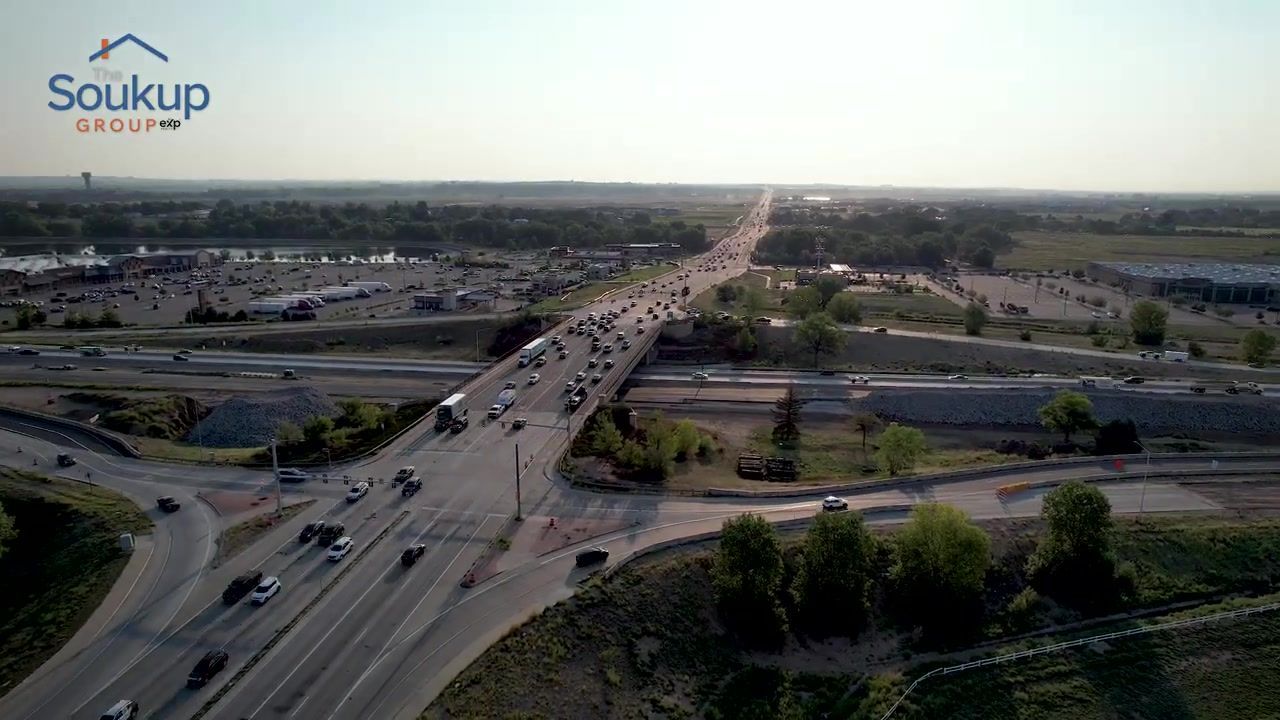
The Fort Collins station is going to be just north of the Drake MAX station, north of Drake Road and just west of College Avenue. That's the Mason Corridor. You've got CSU to the west, Old Town a little bit further north, and you can get to it by the MAX or the trail system. For locals, this is Midtown, the Drake Midtown area, the King Soopers, the old Kmart, the old and current Whole Foods side of town.
This location is not an accident. It's walkable. It's got trail access. It's already got the MAX station right there. And if this train works the way we hope it does, Midtown becomes the next walkable Fort Collins district . Drake to Foothills, train station, MAX, CSU, this becomes a hybrid commuter heaven. If you're working in Denver two days a week, you might look at that area a whole lot stronger than you would have. People who might work in Boulder but want to afford Fort Collins a little bit better? It becomes an option for them.
The redevelopment's already happening around that area. But now you're adding a rail connection that could run six or more daily round trips by 2032. That's a game changer for the neighborhood. CSU and Boulder become even more combined and connected for students, faculty, staff, and startups. You're not just buying near a college town anymore. You're buying near a station that connects you to the entire Front Range.
Now, here's the thing. The sweet spot is going to be near the station, not on the tracks . Right next to the tracks, you've got noise, horns, freight trains that can hurt home values. But within a half mile of the Drake Station? That's where the marketing advantage is. That's where you want to be if you're a buyer today, and that's what you want to highlight if you're a seller.
Travel time from Fort Collins to Denver is estimated at one hour and 45 minutes. Some estimates even suggest it could take one hour and 48 minutes. That's slower than driving, no question. But for me personally, I see it as an opportunity to get me and my family off of I-25 into a safe, no traffic, no crash environment. Maybe it adds half an hour, 45 minutes, but whether that means me personally reading, getting work done, or as a family, time to spend together, and safety, not having to worry about it, that's the dream. Hopefully that works out.
Service starts in 2029 with three daily round trips. Full service by 2032 with six or more daily round trips. The city of Fort Collins says they could look at six daily round trips at full service, and the long-term goal is ten trips per day by 2045. That puts me in my mid-50s, early 60s, depending on when that comes. But six is a pretty big change from only three per day.
If you're an investor, rentals near the station are already appealing to CSU students. Now you're going to look at commuters down to Boulder and Denver, and your investment gets better as well as your rental rates. And if you're a buyer right now, you're not going to pay a train premium today. The market hasn't priced it in and it probably won't until the service is actually real and noticeable. If you're already shopping Midtown, south of CSU, or along the Mason Corridor, the train could be a free long-term premium for you.
Homes Near the Station Could See a Premium, Eventually
National Association of REALTORS® and American Public Transportation Association, National Association of Realtors and the Association of Public Transportation, from 2012 to 2016 suggests that homes within a half mile of transit had a 4% to 24% higher median sales price, and rents near the transit rose 2% to 14%. During the 2006 to 2011 crash, homes near frequent transit performed 42% better.
Now, this is the big thing to understand. Those studies are for frequent service like subways, light rail, BRT. Three trips per day is not that. So the premium doesn't kick in until the service is frequent enough to change people's daily habits. That's 2032 at the earliest, when frequency grows toward the six to ten round trips. That's when a station premium does take place.
But right now, if you're within a half mile of the Drake Station, put it in your listing story. Future rail within a short walk away or short bike. It's a legit marketing strategy and angle to try to get relocation buyers today. But I wouldn't hold out for a premium on your price tag. Your value today is set by what's selling around you. The rolling 12-month data isn't going to be impacted by a train that's coming full service by 2032.
Downtown Loveland: The Absolute Cheat Code
Loveland's downtown station becomes an absolute cheat code for Loveland. That's near Railroad Avenue, right in the heart of downtown. And Loveland is already punching way above its weight for price versus value comparison. You're getting more house, more land, more amenity access for less money than Fort Collins or Boulder. Now you're adding a train station downtown.
This is huge. Loveland has been the value play in Northern Colorado for years, and now it's getting a direct rail connection to Denver and Boulder. If you're a buyer looking at Loveland today, you're not paying a train premium yet. But once that service is running and people start using it, homes within a half mile of that downtown station could see a significant bump.
For sellers, this is a story you can tell right now. You're not just selling a home in Loveland. You're selling a home near a future train station that connects you to the entire Front Range. That's a marketing advantage, especially for relocation buyers who are trying to figure out where to land in Northern Colorado.
The same rules apply here as in Fort Collins. The sweet spot is near the station, not on the tracks. Noise and freight priority are real concerns. But if you're within walking or biking distance of that downtown station, you're in a good position long-term.
Longmont: Twenty Years in the Making
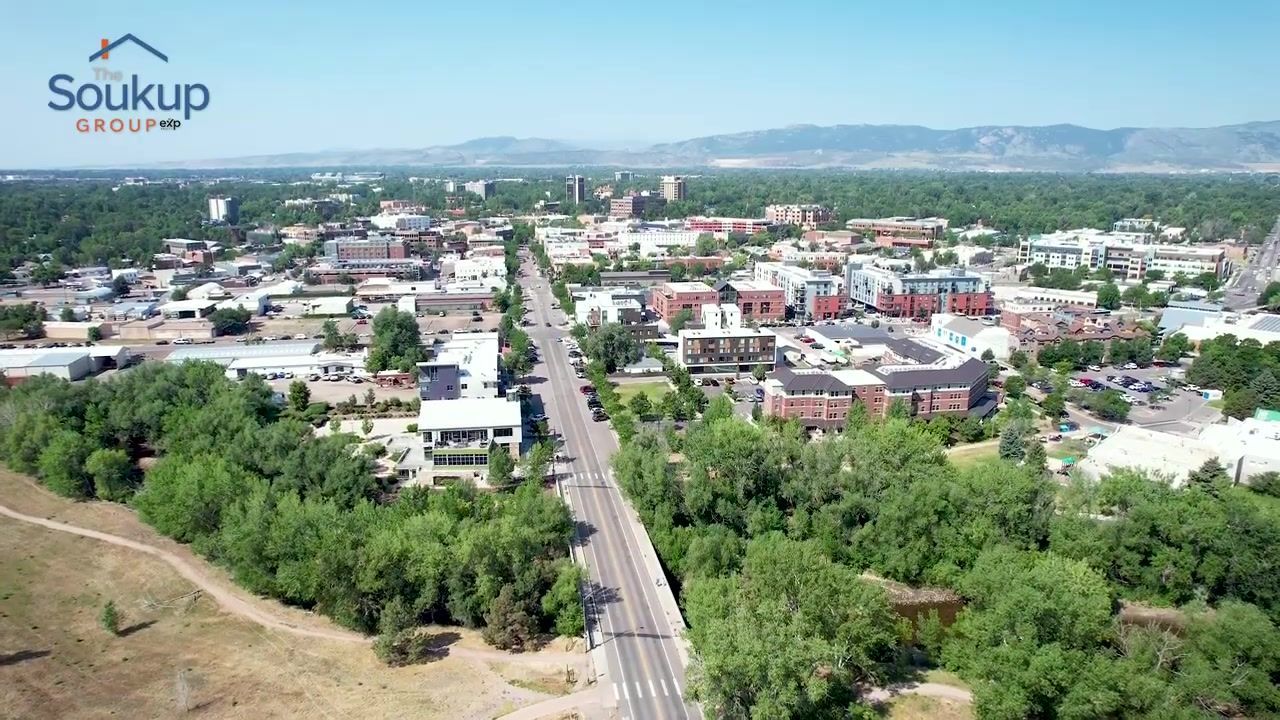
Longmont is part of this story, and it's a complicated one. Folks in Longmont have been paying for a train for 20 years that has never came to be. In 2004, metro voters passed the FasTracks 0.4% sales tax for 119 miles of rail, including from Denver to Boulder and Longmont on a train. It was promised by 2014, but later pushed back all the way to 2044.
RTD estimated it would pay BNSF Railway $66 million for track access, but BNSF's 2012 proposal was $535 million. So the train never came. Longmont residents have been paying that tax since 2004 for rail that didn't materialize. I think that's really important when we look at worst-case sceNational Association of REALTORS®io.
But now, Longmont is part of Phase 1 starter service by 2029. Downtown Longmont is identified as a winner from this rail line. And if the service actually runs and people actually use it, that downtown location benefits significantly. Longmont sits between Fort Collins and Boulder, and a train station there makes it a connector city in a way it hasn't been before.
For buyers in Longmont, you're in the same boat as Fort Collins and Loveland. You're not paying a train premium today, but you could see one down the road if the service is frequent and reliable. For sellers, you've got a story to tell about future connectivity, but you're also going to have to answer questions about the FasTracks promise that didn't happen. Be ready for that.
The Timeline: From 2029 Starter Service to 2032 Full Build-Out
Let's talk about what we actually just voted on and what the roadmap looks like. Just now, the tax that passed was a 0.33% sales tax, or about 33 cents on every $100 spent. And it's permanent. It's going to raise about $295 million a year, and it's authorized to raise $580 million in debt. The repayment cost is going to be up to about $785 million. In Larimer County alone, we voted 54,393 for and only 39,450 against. So people clearly want this rail system.
Phase 1 is the starter service by 2029, and that happened with or without the tax. We're looking at three daily round trips with eight stations: Fort Collins, Loveland, Longmont, Boulder, Louisville, Broomfield, Westminster, and then Denver Union Station. It's already been funded with $330 million committed, $177 million from CDOT and $156 million from RTD. Amtrak will operate the starter service on the BNSF track under a 25-year access agreement with BNSF.
Phase 2 is the full service approach, and they're looking at mid-2032. They're going to add five stations: Littleton, Sterling Ranch, North Colorado Springs, Colorado Springs, and Pueblo. They're also going to add more trips. They're going to move from three per day, and the city of Fort Collins says they could look at six daily round trips at full service. There are some summaries that suggest there are only going to be four trips north of Denver in 2032, but the long-term goal is ten trips per day by 2045.
Ultimately, we could look at some ridership north to Cheyenne. It's about 45 miles, but it doesn't happen unless Wyoming and Cheyenne fund their piece. Imagine getting to Cheyenne Frontier Days by train. And south of Pueblo to New Mexico, New Mexico's new rail plan talks about connecting to the CoCo, and they're also talking about building a new Trinidad station on Amtrak's Southwest Chief route. So there could be some connection east and west there as well.
The plan potentially envisions special event stops at the Broncos' future home at Burnham Yard. Getting down to a Denver Broncos game by train seems like a fantastic option. For me, I'm excited about the opportunity to take the train down to Denver, go shopping, get out at Union Station, go to a Rockies game with my family, come back later in the evening, and not have to drive on I-25.
The Upside: What Could Go Right
Let's just say this all goes swimmingly. Obviously people in Larimer County wanted it, voting so strongly for it. Here's what the positives could look like.
The district is forecasting more than 1 million annual riders in the middle phase and more than 2 million a year at full build-out. The GM suggested that it could carry as many as 3 million riders per year. If those numbers hit, this thing is a success. People are using it. Travel habits are changing. And the economic impact to the region is real.
Midtown Fort Collins becomes the next walkable district. Drake to Foothills, train station, MAX, CSU. The redevelopment that's already happening accelerates. You've got a hybrid commuter heaven. If you're working in Denver two days a week, this area becomes a lot more attractive.
Loveland's downtown station is an absolute cheat code. CSU and Boulder become even more combined and connected for students, faculty, staff, and startups. People who work in Boulder but want to afford Fort Collins or Loveland can make that trade-off work.
And for families like mine, it's about safety and time together. No traffic, no crash, no I-25 stress. Maybe it adds half an hour, but you're reading, working, or spending time with your kids instead of white-knuckling it through a snowstorm. That's the dream.
The Downside: What Could Go Wrong
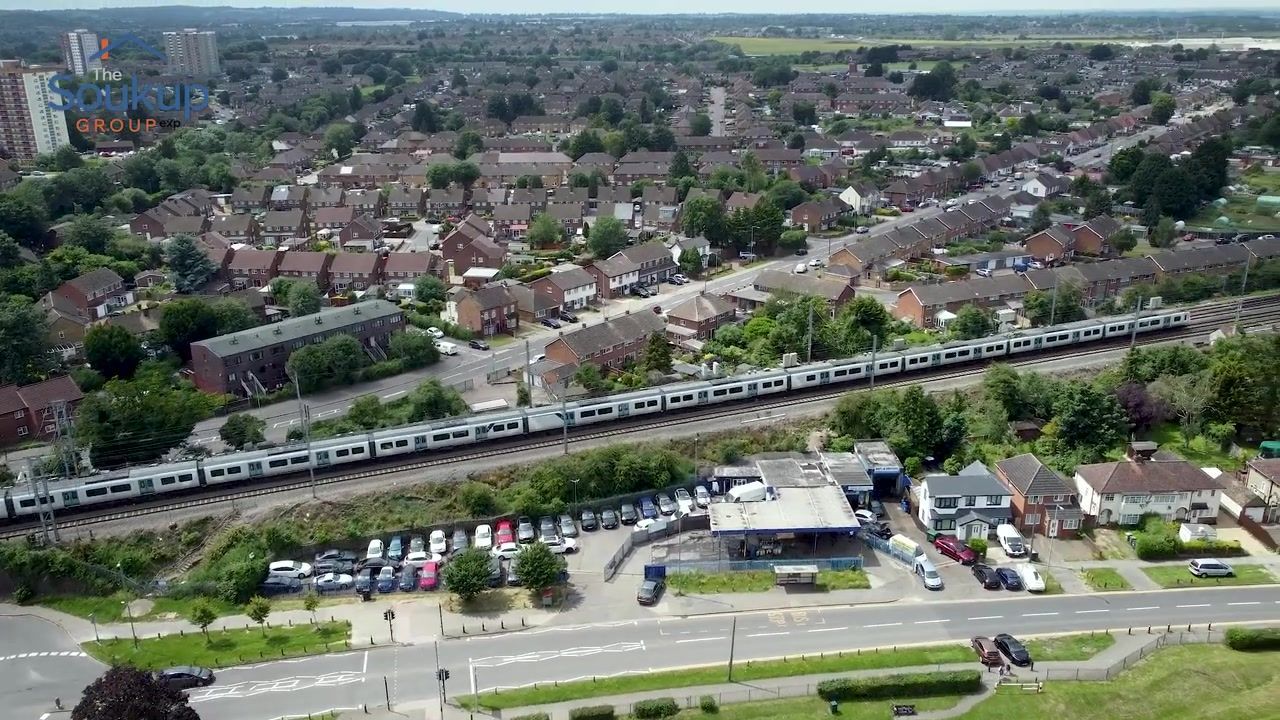
But the reality is there's a downside, and this could not work at all. There were 35,000 people in Larimer County who suggested that, hey, listen, we don't want a 0.33% sales tax. And they had reasons.
Imagine a FasTracks déjà vu. We've already watched a 2004 promise get pushed out by decades. When FasTracks was on the ballot, RTD estimated a $22 million a mile buildout, and what it actually was going to cost was $64 million per mile. Rail costs going up is the norm, not the exception. So one scary thing is the price tag may be a lot bigger than what the tax actually supplies.
The full Fort Collins to Pueblo system buildout is estimated to be $4.7 billion. And to operate this could be $200 million per year. That's a lot of money for a train that runs three times a day at the start.
Also, this is going to go slow. Anywhere from an hour and 45 minutes, or on the faster side, maybe 105 minutes. You can drive down to Denver or Boulder a whole lot faster. Additionally, if you are commuting by driving, there's going to be 100 grade crossings between Fort Collins and Denver. So an additional three, six, or maybe even ten trains that are going to be interrupting traffic going east and west.
One estimate suggests that CoCo will carry less than 0.5% of travel in the entire region for $295 million of taxes per year. That's a tough sell if ridership doesn't materialize.
And the freight's going to come first. We're on BNSF's tracks. At 79 miles per hour top speed, delays behind freight are an absolute real risk. You could be sitting on that train waiting for a freight train to clear, and your schedule goes out the window.
This is a permanent tax. We just voted in a 0.33% sales tax permanently for three trains a day. And imagine if you see empty cars. I can see the headlines now if that's the case. "See, I told you so. This was never going to work," is what the critics will say.
It's going to be super interesting to watch between 2029 and 2032. The starter service, if it goes well, the whole thing kind of snowballs and gains momentum and traction, and people's travel habits change. It could be a really huge economic impact to the region. If it's clunky, it gets cut back. We start discussing, do we need to repeal the sales tax? What do we do? Are we on the hook for 25 years? I mean, it is a big gamble, and hopefully it pays out.
What This Means for Home Prices
Now, what does this mean for home prices, buyers and sellers in the area? Let's break it down by who you are and where you're looking.
Buyers Right Now
You're not going to pay a train premium today. The market hasn't priced it in and it probably won't until the service is actually real and noticeable. If you're already shopping Midtown, south of CSU, or along the Mason Corridor in Fort Collins, the train could be a free long-term premium for you. Same goes for Loveland near Railroad Avenue and downtown, and Longmont downtown.
Loveland, you're already punching way above your weight for price versus value comparison. If you're an investor, rentals near the station are already appealing to CSU. Now you're going to look at commuters down to Boulder and Denver, and your investment gets better as well as your rental rates.
Sellers Right Now
If you're within a half mile of the Drake Station in Fort Collins, or the downtown stations in Loveland or Longmont, put it in your listing story. Future rail within a short walk away or short bike. It's a legit marketing strategy and angle to try to get relocation buyers today.
But I wouldn't hold out for a premium on your price tag. Your value today is set by what's selling around you. The rolling 12-month data isn't going to be impacted by a train that's coming full service by 2032.
Also, be ready to answer questions. If your home is on the BNSF line, your buyers are going to be asking about how often are trains coming, the noise, the timing. The sweet spot is near the station, not on the tracks. Right next to the tracks, you've got noise and horns that can hurt home values.
The Next Ten Years
Really, the next ten years is going to be very interesting to watch. Over the next three years, between 2026 and 2029, that's the hype phase. People want to see this be successful. If you're a buyer, you don't want to pay the premium. But if you're a seller, you want to receive the premium.
Between 2029 and 2032, this is going to be where the proof is in the pudding. Will this work, and how is it impacting your homes, your values, the noise, the closeness? And 2032, if the frequency grows toward the six to ten round trips, I think that's when a station premium does take place.
Conclusion
Fort Collins lost its passenger rail service in 1967, and in 2026, voters officially approved bringing it back. With starter service expected to begin in 2029, the next few years will be an important test of whether this long-awaited rail connection can deliver on its promise.
There are plenty of reasons to be optimistic. If the service succeeds, more people could choose to travel by train, commuting habits could change, and communities along the route could experience meaningful economic growth. However, there are also challenges and uncertainties to consider. Ultimately, the real impact will become clearer once trains are running and ridership numbers show whether people are embracing this new transportation option.
For buyers considering homes near future train stations, sellers looking to highlight their property's location, or homeowners simply curious about their current market value, understanding these changes can help you make more informed real estate decisions. If you'd like to discuss how the Colorado Connector could affect your plans, feel free to call/text me at 970-893-3533 or book a FREE consultation here. We'd be happy to help you understand what these developments could mean for your next move, whether you're planning three months or three years ahead.
FAQ
When does the Colorado Connector train start running?
The starter service begins in 2029 with three daily round trips between Fort Collins and Denver Union Station. Full service with six or more daily round trips is planned for mid-2032. The long-term goal is ten trips per day by 2045.
How long does it take to get from Fort Collins to Denver on the train?
The estimated travel time is one hour and 45 minutes to one hour and 48 minutes. That's slower than driving, but the trade-off is no traffic, no crashes, and time to work or relax instead of being behind the wheel.
Where is the Fort Collins train station located?
The Fort Collins station will be just north of the Drake MAX station, north of Drake Road and just west of College Avenue. That's the Mason Corridor, the Midtown area near King Soopers, the old Kmart, and Whole Foods.
Will homes near the train station increase in value?
Homes within a half mile of transit historically show a 4% to 24% higher median sales price, but only with frequent service. Three trips per day is not frequent enough to create a premium. That premium likely kicks in around 2032 when service increases to six or more daily round trips. Right now, the market has not priced in a train premium.
What about noise from the train?
Right next to the tracks, noise and horns can hurt home values. The sweet spot is near the station, not on the tracks. If you're selling a home on the BNSF line, be ready to answer questions about train frequency, noise, and timing.
What did we vote on in November 2026?
Ballot Issue 7A passed a permanent 0.33% sales tax, or about 33 cents on every $100 spent. It raises about $295 million a year and is authorized to raise $580 million in debt. In Larimer County, the vote was 54,393 for and 39,450 against.
Living in fort collins x The Soukup Group
Expert market analysis and Northern Colorado lifestyle insights from the region's top 1% authority.

Stay ahead of trends
FORT COLLINS AND BEYOND Market UPDATES.
Go beyond the headlines with our deep-dive analysis into local real estate trends and economic shifts. We translate complex market data into actionable advice for homeowners and investors.