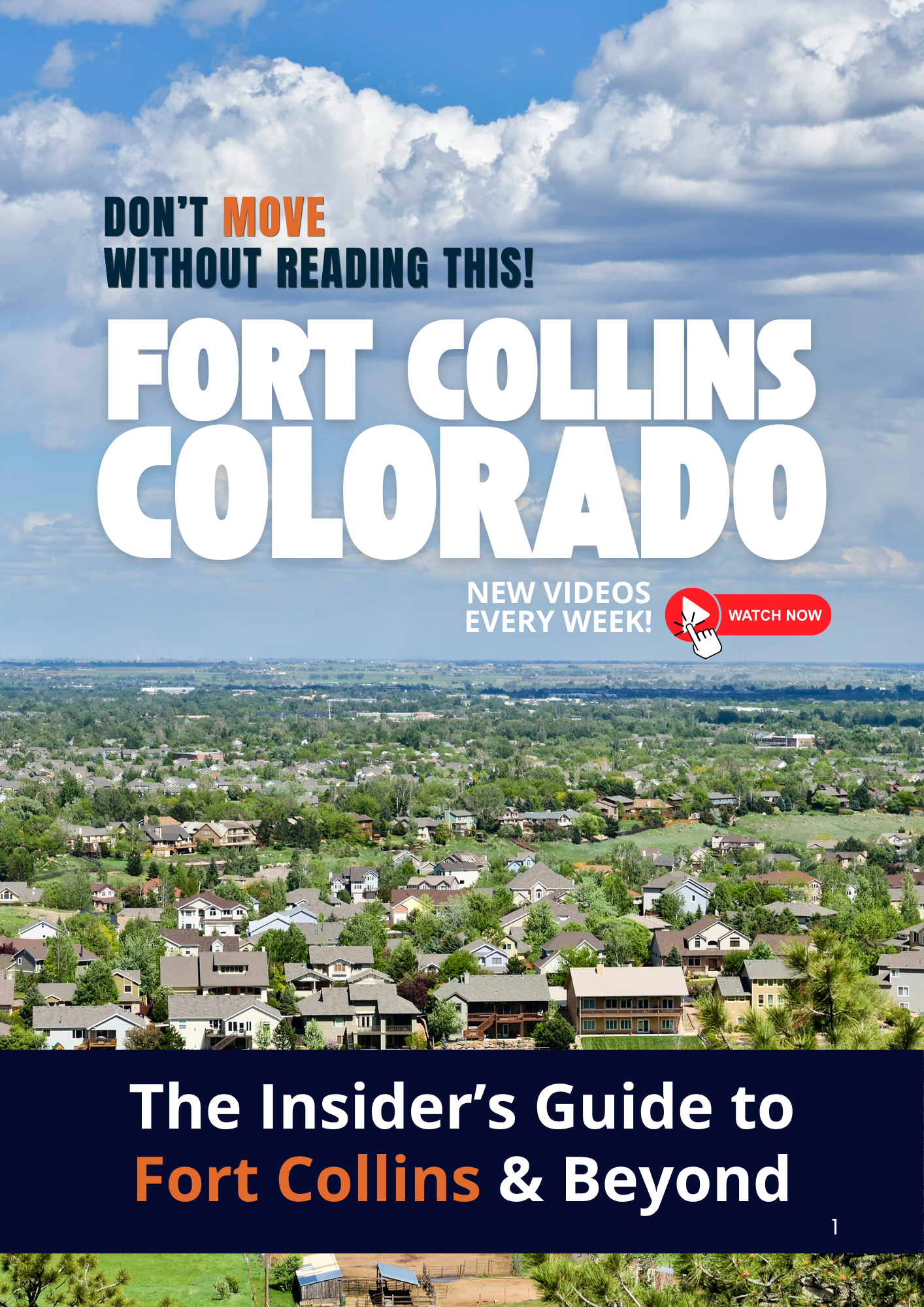
Moving to Fort Collins means choosing a Front Range city that blends a college-town backbone, an active outdoor lifestyle, a genuinely walkable downtown, and easy access to bigger Colorado amenities. We have got foothills immediately to the west, Denver roughly an hour south, Cheyenne about an hour north, and Denver International Airport around 45 minutes away.
But Fort Collins is not simply Denver with fewer people. It has its own rhythm. Colorado State University drives the energy, Old Town provides the heartbeat, and the trail system, Poudre River, parks, breweries, and access to nature create the lifestyle that keeps drawing people in.
Key Takeaways
- Fort Collins sits about an hour north of Denver, roughly 45 minutes from DIA, and directly beside the foothills.
- Colorado State University, Old Town, parks, trails, breweries, and the Poudre River shape the city’s character.
- Most future housing growth is concentrated in northeast and southeast Fort Collins.
- Laporte, Bellvue, Severance, and Windsor are worth considering for different price points and lifestyles.
Table of Contents
- Moving to Fort Collins: Location and Front Range Overview
- Colorado State University and Old Town
- The Outdoor Lifestyle in Fort Collins
- Growth, Development, and Popular Neighborhoods
- Schools, Jobs, Affordability, and Everyday Life
- Nearby Communities Worth Considering
- Final Thoughts on Moving to Fort Collins
Moving to Fort Collins: Location and Front Range Overview
For anyone moving to Fort Collins, geography is one of the first things to understand. We sit on Colorado’s northern Front Range, about one hour north of Denver and two hours north of Colorado Springs. I-25 is the main north-south corridor, connecting Fort Collins to Denver, DIA, Loveland, Cheyenne, and the rest of the region.
Getting to the airport has become much easier with E-470. Depending on where we are in town and traffic conditions, we are generally looking at around 45 minutes to DIA. That is a major advantage for people who travel regularly but do not necessarily want to live inside the Denver metro area.
Fort Collins sits west of I-25, with most neighborhoods buffered from interstate traffic and noise. That is different from places where the interstate slices directly through the middle of town. Here, I-25 is important for regional access, but it does not define the daily feel of most residential neighborhoods.
Head north past Wellington and conditions start to feel more like Wyoming, particularly in winter when wind can become intense enough to close stretches of I-25. South of Wellington, Fort Collins generally benefits from less wind while still enjoying the open Front Range setting.
The foothills create a real western boundary. We cannot simply continue building west because the foothills and public lands are right there. I-25 limits growth to the east, Wellington is to the north, and Loveland is to the south. That natural constraint is part of what makes moving to Fort Collins so desirable, but it also helps explain why demand and affordability remain major conversations.
Colorado State University and Old Town
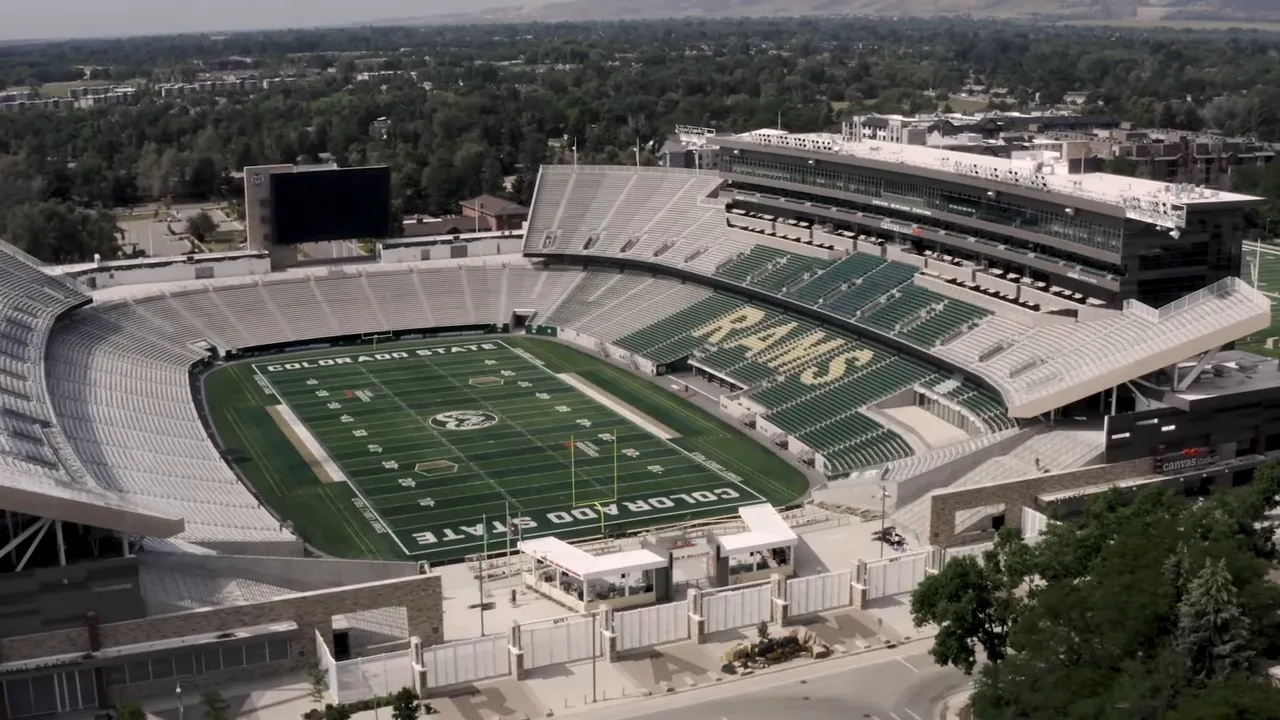
If we are going to understand Fort Collins, we have to start with Colorado State University. CSU is located right in the center of town, and College Avenue at Prospect Road is a useful dividing point for understanding the city. It gives us the northwest, northeast, southwest, and southeast sides of Fort Collins.
CSU is much more than a campus. With roughly 35,000 students and more than 8,000 employees, it has an enormous impact on a community of about 180,000 people. The university creates jobs, brings energy to town, supports businesses, and helps drive the conversation around retaining graduates after they finish school.
The on-campus stadium is a major part of that ecosystem. It seats roughly 30,000 people, with room for potential expansion, and game days bring the campus and surrounding streets to life. The university also includes recreation facilities, intramural fields, Moby Arena, the Lory Student Center, study spaces, and a strong science, technology, engineering, and math presence.
Just north of campus is Old Town, the true gem of Fort Collins. There is a reason people spend so much time here. Old Town is full of local restaurants, boutiques, events, historic brick buildings, public spaces, and that hard-to-fake energy that makes a downtown feel alive.
Fort Collins even has a connection to Disneyland. The historic Firehouse and other downtown architecture helped inspire elements of Main Street, U.S.A. It is a fun detail, but it also makes sense when we walk through the district. Old Town has character, history, and a look that feels distinct from a typical suburban commercial center.
Old Town Square hosts concerts, gatherings, a splash pad, and community events. Linden Street has been renovated as a flexible street that can accommodate cars or close for holiday events and markets. We also see holiday lights running through downtown from early November into Valentine’s Day, giving the area a pretty special winter feel.
North of Old Town Square, the Exchange helped push downtown activity beyond what had once felt like a barrier at Walnut Street. This is now an area where people can grab food, meet friends, spend an afternoon, and enjoy the overall downtown lifestyle without needing a major itinerary.
The Outdoor Lifestyle in Fort Collins
For many people moving to Fort Collins, the lifestyle is the deciding factor. We have more than 45 miles of paved trails within Fort Collins, over 1,000 acres of parks, more than 280 miles of protected bike lanes, and easy access to foothills recreation. This is a place where biking, walking, running, floating the river, grabbing a beer on a patio, and spending time outside are all part of normal daily life.
The Poudre River is especially important. It is an economic resource for agriculture and the region, but it is also one of the best recreation assets we have. People fish, tube, raft, float, and spend time around the river throughout the warmer months.
The Poudre Whitewater Park gives us a visible example of that outdoor culture, with features where people can surf, paddle, and enjoy the river from nearby paths and overlooks. Beyond the city, we have Horsetooth Reservoir, Horsetooth Mountain, Lory State Park, and the Arthur’s Rock trailhead close by.
The regional Poudre Trail is a big deal too. It stretches as a continuous paved route from Bellvue through Fort Collins, Windsor, and Timnath toward Greeley. That type of connected infrastructure matters when we are choosing where to live because it makes recreation part of the transportation network instead of a special destination.
Fort Collins has also invested in safety improvements. A one-mile Power Trail connector under Harmony Road is designed to eliminate a dangerous break in the route and create a continuous trail connection. This $13 million project supports the city’s Vision Zero goal of reducing serious traffic injuries and fatalities involving vehicles, pedestrians, and cyclists.
And yes, breweries are woven into the lifestyle. New Belgium is the granddaddy of the Fort Collins brewing scene and sits about a mile from downtown. Odell Brewing has one of the best patios in town. The appeal is simple: we can work, hit a trail or ride along the Poudre, then meet up at a brewery without making it a whole production.
Growth, Development, and Popular Neighborhoods
Fort Collins is currently around 180,000 people, while the growth management area is expected to reach roughly 250,000. Much of that future growth is aimed at northeast Fort Collins, where there is room for new homes, commercial development, schools, and infrastructure.
Notable northeast projects include Bloom, which features smaller cottage-style homes and a commercial area planned for uses such as food trucks. There is also Saunders at Fort Collins by Water’s Edge, the planned Saunders Village or Saunders East area, Country Club Reserve, and the massive Montava project.
Montava is the big one. It is planned for approximately 5,000 homes on the northeast side of Fort Collins, along with schools and shopping. It has been in the development process for years, and it represents a large share of the city’s expected residential growth.
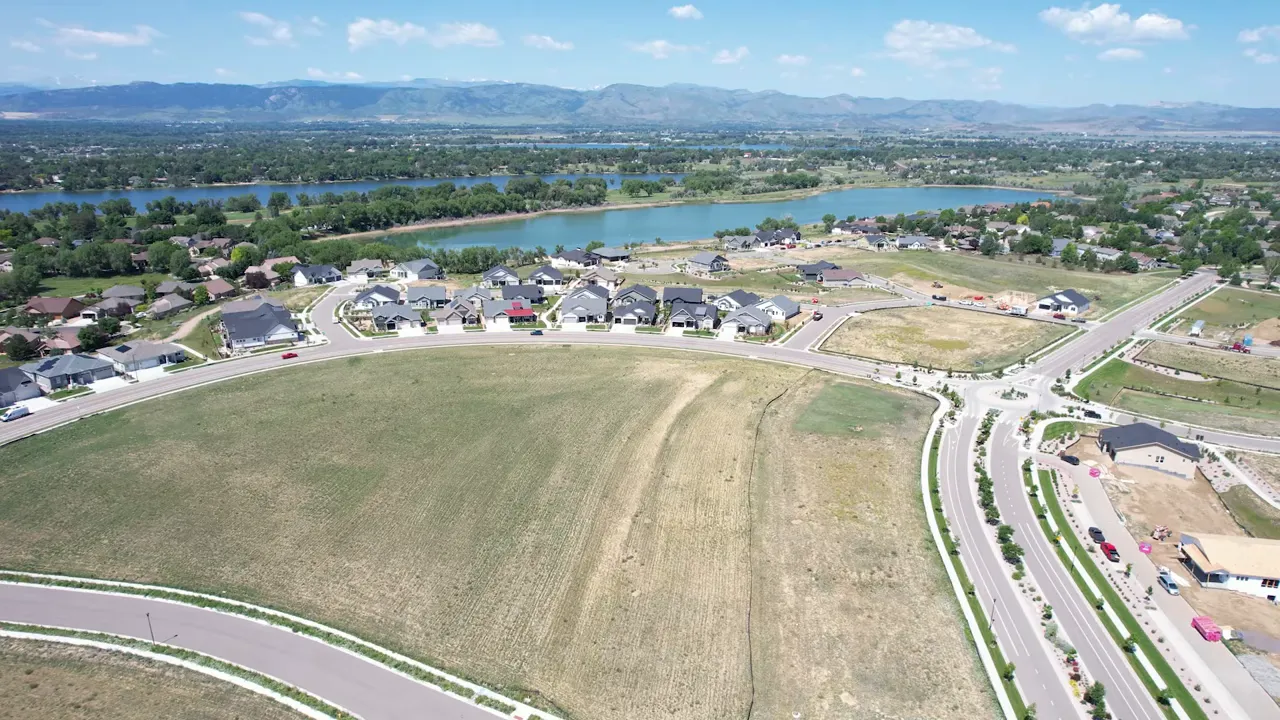
Southeast Fort Collins is also changing. Timberline and the Harmony corridor continue to see infill, commercial additions, multi-use projects, and denser housing. Timberline-area development gives buyers another option, including neighborhoods in the Poudre School District.
One of the more exciting projects is the Southeast Community Center near Fossil Ridge High School and Twin Silo Park. The planned facility is expected to sit on about 10 acres and represents a major future investment for this part of town.
Home Styles by Area and Era
When moving to Fort Collins, we need to think about housing style as much as location. The city developed in distinct phases, and each section has a different feel.
- Old Town and central neighborhoods: Early 1900s through the 1920s brought cottages, bungalows, shotgun-style homes, tree-lined streets, and bike-friendly access to downtown. Mountain Avenue is one of the most desirable streets in the city, and homes there command a premium.
- Midtown neighborhoods: Areas that expanded from the 1950s through the 1980s, including Indian Hills and Parkwood, commonly feature ranch homes, mature landscaping, and in some cases no HOA.
- Southeast Fort Collins: Much of the 1990s-and-newer growth is here, with more suburban neighborhoods, parks, larger development patterns, and broad access to the Harmony corridor.
Water is relatively limited in Fort Collins compared with nearby Loveland. There are smaller bodies of water such as Warren Lake, Lake Sherwood, Lindenmeier Lake, Long Pond, and Terry Lake, plus Horsetooth Reservoir west of town. Homes backing to water are rare, and that scarcity can bring a significant premium. Loveland has more lake options, including Boyd Lake, Carter Lake, Lake Loveland, and the developing Chimney Hollow Reservoir.
Schools, Jobs, Affordability, and Everyday Life
Families often bring up two things when they talk about why they came back to Fort Collins: they feel it is safe, and they value the school system. Poudre School District has ranked among Colorado’s top school districts, and its boundaries extend broadly across Northern Colorado, reaching north toward Wyoming. Charter and private school options are available as well.
Fort Collins is easy to navigate because we are built on a grid. Major east-west roads include Mulberry, Prospect, Drake, Horsetooth, and Harmony. Key north-south corridors include Taft Hill, Shields, College Avenue, Lemay, and Timberline. Once we learn those roads, getting around becomes pretty straightforward.
Harmony Road and College Avenue are the two major commercial arteries. Fort Collins does a good job separating commercial and industrial areas from many residential neighborhoods. Utilities are largely underground, and the city has invested in visual details such as painted transformer boxes, which contributes to the clean, well-maintained feel.
Old Town is where we find the strongest boutique shopping and local restaurant experience. For arts and music, Fort Collins punches above its weight. The Armory is a music venue in a historic military building, Washington’s transformed from a dive bar into another major venue, and the Elizabeth Hotel adds a high-end downtown lodging option. More than 17 downtown alleyways have also been redeveloped with murals, cobblestone, and pedestrian-friendly character.
The employment picture is mixed. Major employers and industries include CSU, Broadcom, Agilent Technologies, Hewlett Packard, Intel, Aago, Woodward, and OtterBox. We also have municipal broadband with fiber speeds from one gigabyte to 10 gigabytes, which makes Fort Collins especially attractive for remote workers.
At the same time, affordability can be tough for people in service jobs, public safety, and other occupations that do not match higher housing costs. Fort Collins can still feel like a value compared with some larger markets, but the gap between local wages and home prices is real. That is a practical consideration we should be honest about when moving to Fort Collins.
|
Nearby Communities Worth Considering
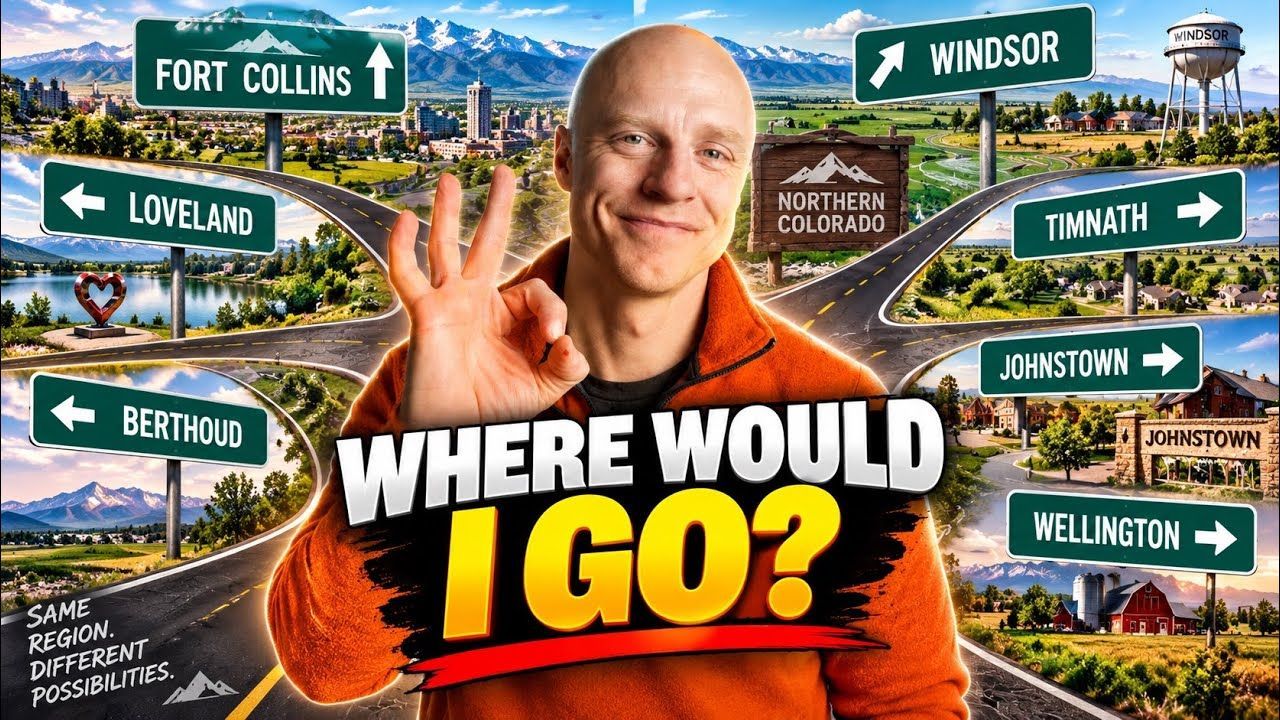
Moving to Fort Collins does not always mean living inside city limits. A few nearby communities may make more sense depending on budget, commute, home style, and the kind of lifestyle we want.
Laporte and Bellvue
Laporte and Bellvue are roughly 10 minutes from downtown Fort Collins and can offer a little more affordability while keeping us close to town. Laporte was even considered as a possible state capital at one point before Denver was chosen. The tradeoff is that these areas can have greater flood-zone and wildfire considerations than Fort Collins proper, which has relatively low fire risk.
Severance
Severance sits near Windsor and is growing quickly. It has newer housing, a newer high school, and some commercial development, including a King Soopers. We should expect roughly a 20-minute drive into Fort Collins along Harmony Road, and we should understand that Severance is still building out its commercial base.
Windsor
Windsor is another compelling option. It currently has about 40,000 people and is expected to grow significantly, potentially reaching between 60,000 and 80,000 people at build-out. Old Town Windsor has a solid commercial zone, while communities such as Water Valley, RainDance, Prairie Song, and Highland Meadows offer growth, amenities, and strong golf-course options.
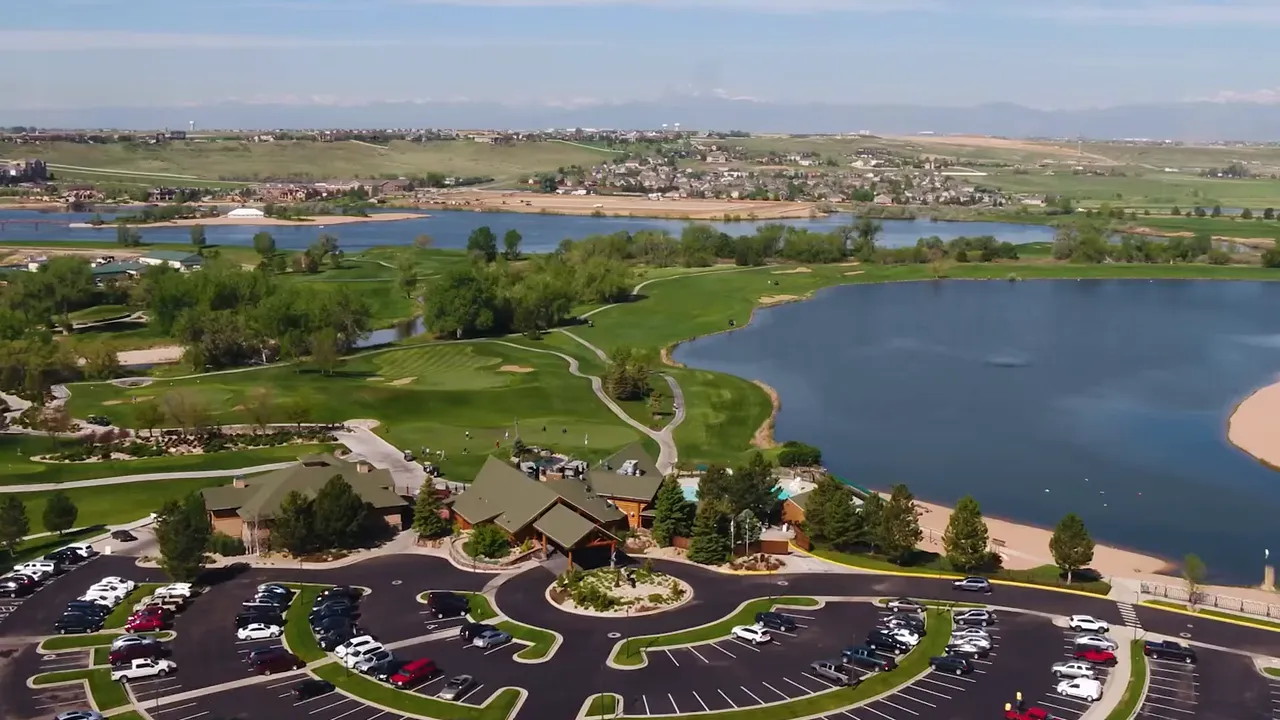
Some people begin their search focused entirely on Fort Collins and ultimately find that Windsor fits their lifestyle better. That is why it helps to compare the communities in person, look at the roads, visit the parks and commercial areas, and get clear on where our daily routines would actually happen.
Final Thoughts on Moving to Fort Collins
Fort Collins works because it has layers. We get a university town without feeling like the whole city revolves around students. We get outdoor access without needing to live deep in the mountains. We get Old Town character, a growing job base, a strong trail culture, family-oriented neighborhoods, and Denver amenities within reach.
It is not a ski town, and that is worth knowing. Rocky Mountain National Park is roughly 55 minutes away, but major skiing is more of a day trip. Steamboat, Breckenridge, Vail, and other major resorts can take roughly two and a half to three and a half hours depending on the destination and traffic. Still, with 64,000 acres of Larimer County natural, open, and conserved areas, hiking, biking, fishing, and everyday outdoor access are very much part of life here.
For us, the best approach to moving to Fort Collins is to prioritize the lifestyle we want first. Are we trying to be close to Old Town? Do we want a mature central neighborhood, a newer southeast community, or an emerging northeast development? Is trail access important? Are schools, airport access, remote work infrastructure, or a nearby brewery patio part of the equation? Once we answer those questions, the right part of Northern Colorado starts to come into focus.
Thinking about moving to Fort Collins and interested in a new construction home? We can help you compare builders, neighborhoods, available communities, and the costs that come with buying new construction.
Call or text (970) 893-3533 or book your FREE consultation today to start planning your move.
Frequently Asked Questions About Moving to Fort Collins
How far is Fort Collins from Denver and Denver International Airport?
Fort Collins is about one hour north of Denver. Denver International Airport is generally around 45 minutes away, depending on where we are in town and traffic conditions.
Is Fort Collins a good place for outdoor recreation?
Yes. Fort Collins has more than 45 miles of paved city trails, over 1,000 acres of parks, protected bike lanes, the Poudre River, Horsetooth Reservoir, and quick access to foothills trails and natural areas.
What is the biggest source of growth in Fort Collins?
Colorado State University is the city’s backbone, supporting jobs, businesses, student housing, and local energy. Future residential growth is expected to be concentrated largely in northeast Fort Collins, including the planned Montava development.
Is Fort Collins a ski town?
No. Fort Collins offers excellent hiking, biking, fishing, and nearby mountain access, but most major ski areas require a day trip. Travel times commonly range from roughly two and a half to three and a half hours depending on the destination.
Read More: NORTHERN COLORADO HOUSING MARKET: WHAT BUYERS AND SELLERS NEED TO DO NOW